
 Riccardo Piacentini

 _
_ versione italiana
 RICCARDO PIACENTINI was born in Moncalieri
(Turin, Italy) on 3rd July 1958. At the age of twenty-two he obtained
his diplomas in Composition and Piano and then, at the Turin University,
he graduated with top marks in History of Music with a thesis
on Goffredo Petrassi. Other diploma in Choral Music and Choir
Direction.
Pupil of Carlo Pinelli (Ghedini’s pupil)
and Roberto Cognazzo at the Turin Conservatory (1974/80), as
well as of Giorgio Pestelli, Paolo Gallarati and Enzo Restagno, he followed
perfection courses and seminars with Franco Donatoni (1984/87,
Accademia Chigiana in Siena and Perosi International Academy in Biella),
Sylvano Bussotti, György Ligeti, Ennio Morricone, André
Richard (as grantee De Sono), Karlheinz Stockhausen. In 1988 he
took part with performances of his
works in the
“Internationalen Ferienkurse für neue Musik”
in Darmstadt. Piacentini has been a prize-winner at international competitions
and selections, including Presteigne International Festival in Wales,
where he represented Italy in 1992 with Ti i for violin
and harp, ICONS in Turin (first international price with
For four for string quartet), Nuove Sincronie in Milan
(Amariamori for G flute), Mario Zafred and Franco Evangelisti in
Rome (Keir for orchestra and again For four),
and “Accademia Musicale Chigiana”
in Siena with the cooperation of
Radio France and “Conservatoire
Superieur de Musique de Paris” (... et coetera for ten
players).
RICCARDO PIACENTINI was born in Moncalieri
(Turin, Italy) on 3rd July 1958. At the age of twenty-two he obtained
his diplomas in Composition and Piano and then, at the Turin University,
he graduated with top marks in History of Music with a thesis
on Goffredo Petrassi. Other diploma in Choral Music and Choir
Direction.
Pupil of Carlo Pinelli (Ghedini’s pupil)
and Roberto Cognazzo at the Turin Conservatory (1974/80), as
well as of Giorgio Pestelli, Paolo Gallarati and Enzo Restagno, he followed
perfection courses and seminars with Franco Donatoni (1984/87,
Accademia Chigiana in Siena and Perosi International Academy in Biella),
Sylvano Bussotti, György Ligeti, Ennio Morricone, André
Richard (as grantee De Sono), Karlheinz Stockhausen. In 1988 he
took part with performances of his
works in the
“Internationalen Ferienkurse für neue Musik”
in Darmstadt. Piacentini has been a prize-winner at international competitions
and selections, including Presteigne International Festival in Wales,
where he represented Italy in 1992 with Ti i for violin
and harp, ICONS in Turin (first international price with
For four for string quartet), Nuove Sincronie in Milan
(Amariamori for G flute), Mario Zafred and Franco Evangelisti in
Rome (Keir for orchestra and again For four),
and “Accademia Musicale Chigiana”
in Siena with the cooperation of
Radio France and “Conservatoire
Superieur de Musique de Paris” (... et coetera for ten
players).
His music is regularly performed in prestigious concert halls and festivals with alluring reviews. In February 1997 he was invited, with Giacomo Manzoni, to appear as a guest composer at the Festival of Italian Contemporary Music in Vancouver, where his Spiritual Drama in one act and three scenes Mal'akhim gave its first performance and where he took seminars on his own music at the Simon Fraser University, the University of British Columbia and the Vancouver Academy of Music. Many concerts and seminars on his music in Institutions such as: Albuquerque – University of New Mexico (Composers' Symposium 2008), Almaty – Conservatory, Arequipa – Universidad Catolica San Paolo, Baltimore – University of Maryland in Baltimore County (UMBC), Basel – Academy, Belgrade – ArtLink Festival and Stankovic Conservatorium, Beijing – Central Conservatory e Beijing Modern Music Festival, Berkeley – University of California, Berlin – Musik-Biennale and Unerhörte Musik at BKA Theater, Bowling Green State Universtity, Brno – Janacek Academy, Budapest – Budapest Spring Festival at Urania National Theater, Buenos Aires – Colon Theater and Centro Cultural San Martin, Canton – XingHai Concert Hall, Darmstadt – Orangerie, Graz – University, Haverford College, Helsinki – Sibelius Academy, Hong Kong – Academy for Performing Arts, Houston – Four Oaks Auditorium, Jakarta – Arts Academy and Pelita Harapan University, Kiev – National Taras Shevchenko University, Köln – Neue Musik Köln - Festival all'Italiana, Kragujevac – Knjazevsko-Srpski Teatar, Krakow – Main Concert Hall and Florianka Saal in Music Academy, Lima – Pirandello Theater, London – Festival Roussel, Madrid – Centro Cultural Buena Vista and Palacio Abrantes, Malta – La Valletta Hall, Marseille – Theatre National, Melbourne – Xavier College, Chapel off Chapel and Federation Hall, Milan I Pomeriggi Musicali at the Teatro Dal Verme, Moscow Conservatory, Münich – Gasteig, New England University (Australia), New York – Mannes College and Modern Works, Paris – Conservatoire National Superieur and Radio-France, Portland State University (Oregon), Riga – Latvia University Theater, Rio de Janeiro – Escola de Musica - Conservatorium, Roma – Santa Cecilia Academy, Festival Nuovi Spazi Musicali, Musica d'oggi and Nuova Consonanza, Rutgers State University of New Jersey, Seoul – Joong Ang University, San Paolo – Circolo Italiano, Shenyang – Liaoning Grang Theater and Conservatory, Singapore – Jubilee Hall and Nanyang Academy of Fine Arts, St. Mary's College of Maryland, Stanford University, Sidney – Conservatory, Tashkent – 3rd and 4th International Festival of New Music, Torino – Settembre Musica and Festival MI.TO, Toronto – SoundaXis Festival at Music Gallery and Bata Shoe Museum, Ulaan Baatar – Opera-Ballet Theater, Vilnius – University Theater, Washington – Levine School of Music, Waterloo – Wilfried Laurier University, Wien – Klangforum and Creatives Centrum, etc. In December '99 “Mal'akhim” was represented again in Turin, in the Metropolitan Cathedral with the staging by Teatro Regio and the whole national RAI broadcast. In October 2000 the same opera gave another performance for the International Celebration for the Holy Shroud. In February ‘99 his show for children 7x7+7 was represented at the Santa Cecilia National Academy in Rome and, two months later, at the Ilkhom Theater in Uzbekistan. Always in ‘99 Piacentini composed Musiche dell'aurora (Dawn musics), recorded on two CDs like enviromental music for the 8th Biennial International of Photography in Turin, first official example of “foto-musica con foto-suoni“© (“foto-musica con foto-suoni”), followed by Arie condizionate (Air conditioning) with original texts by Sandro Cappelletto on a cd for the 9th Biennial International of Photography (2001) and, again on Cappelletto's texts, by “Sine nomine” for the commemoration of Shoa' at Carlo Felice Theater in Genua (2002), Treni persi (Lost trains, 2003) for the Train Museum in Bussoleno, Mina miniera mia (Mine my mine, 2004) for Traversella mines and Musiche della Reggia di Venaria Reale (Music for the Castle in Venaria Reale, 2005). His works have been published by Curci, Edipan, Agenda and Rugginenti. Recently the Curci Editions pressed his text Armonia tonale [Tonal Harmony] too, for the studies of Composition in Conservatory, and, in 2011, I suoni delle cose [The sounds of things] - Poetica del foto-suono tra Filosofia, E(ste)tica e Musica presented at MiTo Festival in Turin, DMS in Bologna and Teatro La Fenice in Venice.
His scores have been published by Curci, Edipan, Agenda and Rugginenti. Recently the Curci Editions pressed his text “Tonal Harmony” too, for the studies of Composition in Conservatory. He has made CDs and recordings for Radio-France, RAI, RSI, Radio Nazionale Uzbeca, Radio Vaticana e per le etichette Curci, Datum-Stradivarius, DDT, Edipan, Happy New Ears, Nuova Era, Rainbow, Rivoalto, Steirischer Tonküstler Bund, Stradivarius.
As pianist he works regularly in partnership with Tiziana Scandaletti, soprano, with whom in ‘97 he founded the Duo Alterno (tours in Argentina, Australia, Austria, Belgium, Brazil, Canada, China, Denmark, Finland, France, Germany, Holland, Hong Kong, India, Indonesia, Kazakistan, Latvia, Lithuania, Macedonia, Malta, Mongolia, Norway, Peru, Poland, Russia, Serbia, Singapore, Spain, Sweden, United Kingdom, USA, Uzbekistan...) and made first recording of Giacomo Manzoni's “Du Dunkelheit” and of the whole sacred works for voice and piano by Giorgio Federico Ghedini. Other monographic CDs on lyrics by Ghedini (Canti e strambotti), Alfredo Casella and Franco Alfano). For Stradivarius label La voce contemporanea in Italia - 1st CD, 2nd CD, 3rd CD, 4th CD, 5rd CD and La voce crepuscolare - Notturni e serenate del '900.
He is also the founder and director of the Rive-Gauche Concerti in Turin and teaches Harmony, Counterpoint, Fugue and Composition at the Alessandria Conservatory where he is the chair of the Composition Department.
Previous photo by Stefano Bonafé © 2010
 “Foto-musica
con foto-suoni” ©
“Foto-musica
con foto-suoni” ©
Do you know what is "foto-musica con foto-suoni" ©?
Since 1999 to today Riccardo Piacentini realized many works and several writings, published on specialistic reviews, about "foto-musica con foto-suoni" ©, which is a technical expression patented from the same composer to define a particular kind of ambient music. In this one Piacentini recorded all over the world through his DAT "sound-reportages", utilized in a musical syntactical grammar.
Go to the pdf link to discover some detailed informations.

Other links at:
www.rivegaucheconcerti.org
(for a complete series of writings and several samples of "foto-musica con
foto-suoni"©)
and
http://it.wikipedia.org/wiki/Foto-musica (for a whole encyclopaedic
description).
On musical works of "foto-musica con foto-suoni" ©:
• in 1999
two CDs for the 8th Turin Biennial
International of Photography –
Musiche
dell'aurora (Dawn Music) and Shahar;
•
in 2001
CD
Arie
condizionate (Conditioning Airs)
on Sandro Cappelletto's texts
for the 9th Turin Biennial International of Photography;
• in 2003 CD
Treni persi (Lost trains), always on Cappelletto's texts, for the
Train Museum of Bussoleno;
• in 2004 CD
Mina miniera mia (Mine
my mine) for the mines in Traversella and CD
Musiche della Reggia di
Venaria Reale (Music for the Castle in Venaria Reale);
• in 2005
Et amoris: tango pour Bruno (first
performance Turin, Conservatory);
• in 2006 CD Foto-suoni per le Universiadi
(first performance Bardonecchia, Winter Olympic
Games);
• in 2007 The Brown Cage (first
performance New York, Modern Works) and Jardins
sur la pluie (first performances Turin
Conservatory and Albuquerque University of New Mexico);
• in 2008 An Mozart (first
performance Toronto, SoundaXis Festival);
• in 2009 Foto-suoni delle nuove scienze (first
performance Toronto, Bata Shoe Museum), Piano alla
corda (first performance Milan) and Romanesco (first performance
Rome, Nuova Consonanza Festival);
• in 2010 Presto Vivaldi (first
performance Alessandria, Intorno al '900), Ulaanbaatarin doo (first
performance Ulaan Baatar, Opera Theater),
Canson piemontèisa and Quattro canzóne napulitane
(first performance Milan, Teatro dal Verme, Orchestra
dei Pomeriggi Musicali),
• del 2011 Rataplànplanplan (first performance
Berlin, BKA Theater, Unerhörte Musik).
For the photo-sounds' archives – which Riccardo Piacentini, day after day and trip after trip, got together on DAT and catalogued on a specific database – go to the next pdf link.
 WORKS
AND PERFORMANCESMusic with electronic instruments or tape
WORKS
AND PERFORMANCESMusic with electronic instruments or tapeIn this group of works (signed with the alphabetic letter E) you will find the PIACENTINI's compositions with electronic instruments or tape. For the tape part, where it is not linked here, please contact the composer.
For example:
GPLOT PER UNO for bass-clarinet and live-electronics (1990, elaborated at the Heinrich Strobel Center in Freiburg),
LYRICHE for voices, clarinets and concrete sounds (2 live performers and tape) (30' version) (1991/92),
LA TRAGICA STORIA DEL DOTTOR FAUST for tape and puppets (1994),
IL VIAGGIO FINISCE QUI (The trip stops here) Melologue on texts by Eugenio Montale for basset horn, harp and tape (1994/96, elaborated at the DIST of Genoa),
MAL'AKHIM Spiritual Drama in one act and three scenes for soli, choirs, organ and tape (1996/7, elaborated at the CRIM Studios in Turin) ,
MUSICHE DELL'AURORA (Dawn musics) for child voice, soprano, bass flute and digital tape (1999, for the 8th International Biennial of Photography)
► SHAHAR vers. for soprano, bass flute and “foto-suoni”,
► CHORSU BIMBO for child voice, soprano , bass flute and “foto-suoni”,
MIDI LAUS for flute, A clarinet, cello and audio-digital support (CD) (2000) dedicato a Franco Donatoni,
MIDI LAUS II for flute, B clarinet, contrabbass and audio-digital support (CD) (2000) dedicato a Franco Donatoni,
MIDI LAUS IIB for flute, B clarinet, contrabbass in A-E-H-F# and audio-digital support (CD) (2000) dedicato a Franco Donatoni,
MIDI LAUS III for flute, English horn, A clarinet and audio-digital support (CD) (2000) dedicato a Franco Donatoni,
ARIE CONDIZIONATE (Air conditioning) for female voice, hands, trombon and “foto-suoni” on digital tape (CD) (2001, for the 9th International Biennial of Photography)
►
►
►
MINA MINIERA MIA for voices and “foto-suoni” (2004)
► MUSICA PER LE GALLERIE for voices and “foto-suoni”,
► MUSICA PER L'OPIFICIO for voices and “foto-suoni”,
FOTO-SUONI PER LE UNIVERSIADI for “foto-suoni” on CD (2006),
and others...
Please go through the particulars in the file pdf linked to the following animated gif!
Music for medium or large ensembleIn this group of works (letter B) you can find the PIACENTINI's compositions from ten players to the large orchestra with soloists and choirs.
For example:
ALTERNO for string orchestra or 13 solo strings (1986),
...ET COETERA for 10 players (flute, oboe, B clarinet, bassoon, marimba and vibraphone [2 performers.], violin, viola, cello, contrabbass) (1986),
EMOUVANT for orchestra (1987),
SACRE for soloists, choir and orchestra (1989, for the Budapest Orchestra and Kodaly Choir),
KEIR for orchestra (1989), KERPLOT for 2 voices and orchestra (1989/1990),
GPLOT PER DIECI for organ and 10 wind instruments (flute, 2 oboe [2nd also English horn], 2 B clarinets [2nd also bass clarinet], 2 horns, bassoon) (1990),
SPLANAMENTO DE LI PROVERBI DI SALOMONE for choir (1990),
L'AURA for string orchestra or 12 solo strings (1991),
FOR DE LA BELLA BELLA CAYBA for soprano, flute and string orchestra (1991/1995),
DUE LAUDE DI JACOPONE for soprano, violin, cello, organ and orchestra (1995),
and others...
Please go through the particulars in the file pdf linked to the following animated gif!
Music for small ensembleIn this group of works (letter C) there are PIACENTINI's chamber music since three players to nine performers.
You can find:
trios
► RECHERCHE III for violin, cello and piano (1988),
► STRICK for guitar and string quartet (1988),
► ECLAIR for guitar, harp and piano (1989),
► SWITCH for viola, cello and piano (1990),
►
►
►
► CI RIESCI A VEDERLI I GABBIANI? for soprano, clarinet and viola (1995),
►
quartets
► MORCEAU DE CONCOURS (CALLIGRAPHIES DANS LE STYLE NEOCLASSIQUE) for flute, clarinet, horn and bassoon (1979/86),
► EAU for string quartet (1986),
►
►
►
►
►
►
►
►
►
quintets
► ES for flute, B clarinet, violin, viola and cello (1985),
► STRICK for guitar and string quartet (1988),
► COHESIVE ENDS (“STICKY”) for 14 instruments and 5 players (piccolo, flute, G flute [1 esec.] violin, percussions, guitar, harp) (1989),
► SPLANAMENTO DE LI PROVERBI DI SALOMONE for 5 solo voices (1990),
► MUSICHE PER UN FRAMMENTO for flute and 4 strings (violin, viola, cello, contrabbass) (1990),
►
► MUSICHE PER LEONARDO (CARILLONS) for B clarinet and string quartet (1994),
► IL GRIGLIABETO SONANTE for oboe [also English horn], 2 violins, cello and harpsichord (1998),
sextets
► RECHERCHE for flute, oboe, B clarinet, horn, bassoon and piano (1987),
► EVIDENCES for 7 instruments and 6 players (1987),
► LA QUEUE for flute, oboe, B clarinet, horn, bassoon and piano (1989),
►
►
seven players
►
till nine players.
Please go through the particulars in the file pdf linked to the following animated gif!
Music for 2Here is the catalogue of PIACENTINI'S music for two players.
There are pieces for
bass clarinet (also alto sax) and accordion
►
bass clarinet (also alto sax) and percussions (1 percussionist)
►
bass clarinet and baryton sax
►
cello and piano
►
clarinet and percussion
►
flute and harpsichord
►
flute ad piano
► RÀPTIM ÀLIGER (1987),
four hands piano
► STRICK II (1988),
► STELE DU CHEF (1993),
harp and violin
► TI I (1993),
viola and piano
► D'APRÈS (CINQUE VARIAZIONI PER UN BAMBINO) (1990),
violin ad piano
► ABRUPTE!!(1993),
voice and clarinet
►
voice and piano
► FAULTY WORK (1990),
► OYE, HIJO (1990),
► MUSICHE PER LEONARDO (YPNOS) (1993),
►
voice and trombon
► RAEP ON BETA (2001),
and several others.
Please go through the particulars in the file pdf linked to the following animated gif!
Music for 1PIACENTINI's music is very attempt to the single instruments.
So in this group (letter A) you can find many pieces for solo instrument:
cello
►
clarinet (piccolo, B clarinet, bass-clarinet, horn clarinet)
►
► DIECI SPLEENS (REV. SETTEMBRE 1991) for B clarinet (1991),
►
►
►
flute (piccolo, normal, G-flute, bass-flute)
►
►
►
►
►
guitar
►
►
►
harp
►
harpsichord
►
organ
► A MEN (1992),
► MUSICHE PER LEONARDO (JEU) for organo with “campanelli” (1998),
►
►
percussion (one player)
►
►
piano
► PER (1984),
►
► RECHERCHE II (1987),
► FLYING (1990),
►
► MADRILEÑO (1991),
►
►
►
►
►
►
sax
►
violin
►
voice
► CANTICO SPIRITUALE (1993),
►
trombon
►
In these pieces PIACENTINI explores the depth of the technique and the expressive possibilities of the single instruments. He likes so much to work with the monochrome sound.
Please go through the particulars in the file pdf linked to the following animated gif!
 REVIEWS
Reviews but not only. Opinions
too written from important persons of the world of the Culture.
From
“Il Giornale della Musica” – November 2012: The Italian voice, as it is today“The Duo Alterno's project on one of the most karst ensemble in the contemporary compositional thought [...] lands to its fifth e
pisode, themed around love, that does not fear eclipse nowadays but accepts many stylistic disguises: starting from the Canzoni d'amore [Love Songs] by Ferrero, a compilation of 1985, dated but not aged [...] excellently supported by the fine performers. They also manage brilliantly in the other recent works, from the two theatrical-musical extracts by Battistelli and Vacchi [...] to the four Divertissements that involve [...] other instrumental soloists (Carla Savoldi and Virginia Arancio), the Orchestra I Pomeriggi Musicali conducted by Roberto Gianola, and the process of sampling-layering of sound slides (the 'foto-suoni') dear to the composer Piacentini.” (Alessandro Mastropietro)From
“L'Italo Americano” – October 11th 2012: Duo Alterno – The Sound of Things in Los AngelesSurreal, anarchic, original, ‘décalée’, entertaining [...] Duo Alterno is this and much more. Formed by pianist Riccardo Piacentini (professor of Composition at the Alessandria Conservatory) and vocalist Tiziana Scandaletti (professor of Vocal Chamber Music at Santa Cecilia Conservatory), the Italian artists performed in Los Angeles for the second time, guest of the Roy and Edna Disney / CalArts Theater (REDCAT), surprising the audience with their show ‘The Sound of Things’. The interdisciplinary contemporary arts center in Downtown LA is known for encouraging experimentation in all the art fields, and no better place could in fact host Duo Alterno for this rare US appearance supported by the local Italin Cultural Institute. Considered one of the most interesting projects of the last years, Duo Alterno presented the results of its experimental research. Their art is a mix of philosophy, esthetic, and music [...] Sounds, objects and movements we would never expect can create something beautiful, like the closed piano that Piacentini ‘plays’ by touching its surface, while the vocalisms of Scandaletti ‘fill in’ the space. The message is: every little sound is important in music, as well as every little brushstroke is important in painting. Music meets words then. Piacentini and Scandaletti accompany their music with lyrics taken from John Cage [...], Carlo Alessandro Landini [...], and alternate them with their own compositions, like Jazz motetus VI and Rataplànplanplan. This last one is the perfect synthesis of Duo Alterno's theories: a mix of sounds and pictures taken in California, Hong Kong and Italy. The Pacific Ocean is no longer an element of separation, but a connection between parts of the same reality. The show goes on with Ophelia Fragmente by Luca Lombardi [...], traces of Italy in Epitaffi sparsi by Ennio Morricone [...]. Come passa la giornata Betty Boop is the climax and closing act of the show, a funny, crazy performance that perfectly reflects the paradox of Duo Alterno... A duo that seems to have found some harmony between order and chaos. [...]” (Charlotte Raniero)“
From
“Los Angeles Times” – October 3rd 2012: Duo Alterno in adventurous musical form at REDCATWhen singers are accompanied by pianists, they tend to be just that: singers… and their second bananas. No matter how much importance a composer puts into the piano part, no matter how significant the pianist, the voice feels primary. By its name, the Duo Alterno, which specializes in modern Italian music and which appeared at REDCAT on Tuesday night, makes an effort toward parity. [...] Scandaletti has a strong personality. [...] But, in fact, Scandaletti turned out to be no attention-getting match for Piacentini. He is a pianist, composer, collector of environmental sounds, music theorist and professore. And ham. A flashy dresser himself — tight, shiny suit, burgundy shirt, glitzy bow tie and shoes — he offered lengthy, good-natured philosophical introductions in heavily accented English to every piece, two of which were solos for piano and electronics. [...] The concert opened with Cage's ‘A Flower’ and ‘The Wonderful Widow of Eighteen Springs’ for voice and pianist tapping percussively on a closed keyboard. Tapping here became foreground rather than background, as Piacentini practically danced with his Yamaha grand. Piacentini's saving grace is that he happens to be a terrific pianist and, once you get past the impossible ego, a lot of fun to watch. But his own compositions — ‘Rataplánplanplan’ and ‘Jazz Motetus VI (Cricket Play)’ — were surprisingly without excessive flair. They included a rather tame piano part and mixtures of the sounds Piacentini likes to collect on the duo's travels and which he calls "foto-suoni" (photographic sounds). In the bluesy jazz piece, crickets recorded in Baltimore chirped behind traditional Chinese instruments heard in Beijing. The Modernist Italian works came from the past three decades. Luca Lombardi's 1982 ‘Ophelia-Fragmente’ is a setting of a violent German text by Heiner Müller, translated into English. The aggressive piano part doled out abuse. The soprano conveyed powerful angst. Excerpts from Morricone's "Epitaffi Sparsi" (Scattered Epitaphs) from the early '90s, trucked in absurdity. The text by Sergio Miceli begins with the line ‘I couldn't give a damn about Spoon River’. The style of Morricone's many concert works can be considerably more avant-garde than that of his film scores, and for all the seductive playfulness he afforded Scandaletti, he paid just as much mind to Piacentini. The last scattered epitaph was a parody of a pianist playing his scales, flamboyantly attempting to master the ‘pianoforte’, but struck down before he could become a ‘mezzofortist’. Introducing Gentile's ‘La Giornata di Betty Boop’, written six years ago for the duo, Piacentini described the piece as an imagined day in the life of the cartoon character. And also as a joke on him. He then went off stage and returned without his suit coat and with a tail pasted onto his trousers. Sandro Cappelletto's text is full of nonsense. Betty studies and takes Boby for a walk. Her pouty lesson in solfeggio is a parody of musician names — ‘A-a-abbado!’ ‘Mu-u-ti-iiiii!’ ‘Zu-u-bi-bin!’ ‘No-no-nono!’ A waltz turns into rock music. And Piacentini/Boby prances, no second banana but proud pooch.” (Mark Swed, Los Angeles Times Music Critic)“
From
“Musica” – September 2012: The Italian contemporary voice vol. 5 (artistic score ****)“[...] The Duo Alterno was able to convince to its strong narrative vein. The works recorded here are genuine songs of love and, except the explosive Lorenzo Ferrero's Love Songs [...] composed in 1985, are compositions licensed in these past few years and devoted expressly to this duo. The CD is completed by a rich and in-depth essay signed by Guido Barbieri which is worth reading.” (Massimo Viazzo)
From
“Classic Voice” – June 2012:Contemporary. The Italian chamber lyric vol. 5
“Tiziana Scandaletti and Riccardo Piacentini since 1996 are musically associated as Duo Alterno and, in this role, they give life to one of the most interesting recording projects of recent years, not counting the countless concerts kept in all the world. This is a precise and intelligent field choice: instead of swelling the ranks of artists who do always the same things, the two musicians have decided to devote themselves - thanks also to the composer activity of the same Piacentini - to the Italian contemporary chamber lyric, starting their exploration since the dawn of the twentieth century (magnificent their recordings of Ghedini, Casella, Malipiero, Tosti), right up to the present day. [...] The couple Scandaletti-Piacentini performs the interesting Canzoni d'amore by Lorenzo Ferrero [...] two transcriptions by Vacchi and Battistelli, expressly created for the Duo [...] pieces by Pieralberto Cattaneo, Victor Andrini and the same Piacentini, here facing, in Canson Piemontéisa, with his now-classic ‘foto-suoni’, this time accompanied by the orchestra of I Pomeriggi Musicali, well directed by Roberto Gianola.” (Carmelo Di Gennaro)
From “Musica” – June 2012:
Musical readings. Riccardo Piacentini, The sounds of things
“[...] The sounds of things [I suoni delle cose] is the result of explorations that its author has made in many countries to collect recordings of sounds in various contexts ('from the popular market of Tashkent, to the streets and subways of half the world'), then to be used ‘in his music and reflections on the history of philosophical thought from the pre-Socratic philosophers to today' [...] Riccardo Piacentini, pianist, composer and writer, goes through a backward path that comes from music to philosophy and then returns to music, or rather to the musical composition of 'foto-musica con foto-suoni', from which his CDs of soundtrack music were born since 1999. Investigating the guidelines of the thought that makes music capable to welcome all everyday life sounds [...] Piacentini is supported not only by the sociologist Revelli, but also by Sandro Cappelletto. The book includes a DVD that contains the interactive version of the text and fiftyeight audioexamples of 'foto-musica', with the voice of Tiziana Scandaletti. It's a read [... of] keen interest in boldness of setting and breadth of research undertaken.” (Sergio Pagliantini)
From “Il Sole 24 Ore” – May 20th 2012:
Noteworthy. The cosmos in the ‘foto-suono’
From “Classic Voice” – April 2012:
(Rosa Alba Bucceri)Riccardo Piacentini. I suoni delle cose [The sounds of things]. Poetics of the ‘photo-sound’ between Philosophy, Aesthetic and Music (Curci, 352 pages + dvd)
“A sound reportage across a decade, envrironmental daily sounds, collected from all continents and contexts – markets, roads, subways – and placed in musical projects, as active fragments of the soundscape. In this book, structured as a score and accompanied by a DVD with 58 examples of ‘foto-musica’ [photo-music], Riccardo Piacentini, assisted by friends who have shared and followed the path of the photo-music, does justice to the ‘acoustic minorities’ and explores their poetics in the light of the thought of great philosophers, coadiuvato da amici che hanno seguito e condiviso il cammino della foto-musica, rende giustizia alle ‘minoranze acustiche’ e ne esplora la poetica alla luce del pensiero di grandi filosofi, Schelling at the head.”
From “Il Corriere della Sera”, insert “Corriere del Veneto” – April 12th 2012 (on the live performance of April 11th at the Teatro La Fenice, Sale Apollinee, Venice):
(Orsola Bollettini)Piacentini: «Catching the sounds of things. A journey through the music»
“A journey inside the sound, or better a journey translated in sound. It is what Riccardo Piacentini proposes us [...] in I suoni delle cose [The sounds of things] (ed. Curci, Milan 2012, euros 37,00). From Beijing to Baltimore, from California to India, Piacentini tells us about his ‘foto-suoni’ – patented idea – and the strict relation with the philosophy. [... To our questions he answered:] «It's a requirement established in '99 to capture any kind of acoustic experiences. I had a commission from the Biennial of Photography in Turin for a photo exhibition and i flashed the close link between music and place. [...] in my book I talk about aesthetic, the bond that since ancient times philosophers have studied and deepened between philosophy and music and musicians have grasped much less. [... The voice is] the most complete ‘foto-suono’ that has ever existed, the most human. I'm convinted that ‘absolute music’ doesn't exist, expressivity goes beyond the fine craftmanship of a work, and the voice represents one hundred percent this idea». From the experience alongside masters such as Ennio Morricone, Franco Donatoni and Carlo Pinelli, Piacentini gives us a new experience. And together with him Tiziana Scandaletti made this clear [...]”
From “Suono” – February 2011:
La voce contemporanea in Italia vol. 5
“Ferrero, Battistelli, Vacchi, Cattaneo, Andrini, Piacentini are the composers [...] Doubt, betrayal, pain are realized from the voice with a variety of accents, without artifices. The piano emphasizes phrasing and enhances feelings [...]” (Paola Raschi)
From “Suonare News” – January 2012:
“The soundscape is the set of all the sounds [...] around us. The ‘foto-suono’ is an extract of the soundscape, recorded by one of the endless possible positions. The ‘foto-musica’ is the result in composition, born through the organization of the ‘foto-suoni’. The locution that synthesizes this process, ‘foto-musica con foto-suoni’ ©, was coined by the Turin composer Riccardo Piacentini. The tome, published by Curci, was treated by the same Piacentini: a fascinating journey, from the ‘foto-musica’ to the dawn of the Greek civilization, across the history of philosophy [...] The book is accompanied by a DVD, with 58 audioesempi, interpreted by the soprano Tiziana Scandaletti. With Cage, we just have to wish Happy New (Y)Ear(s)!” (Antonio Galanti)Soundscapes between philosophy and music
From “Civiltà cattolica” – November 2011:
Total music
“The Turin composer Riccardo Piacentini offers to his readers a book of astonishing originality and – we add – spirituality. Ranging, in doing this, from Schönberg to Hannah Arendt, from Giotto to Berg, from Haydn to Camus. He is a restless man, constantly traveling through five continents [...] Piacentini's musical poetics not only delves into the sound, in its perception [...] raising a hymn to life [...] but it is also highly attentive to recognize strong similarities between vision and hearing, with a marked penchant for photography. Music and poetry of 'reality', but reality sublimated and transcended that should serve, according to Piacentini, as a salutary 'antidote to the vulgar pollution' as well as a 'trace of an intelligent civilization'. Acting through dialogue, dialoguing through act, Piacentini writes [...] The concept of 'foto-suono' is compared from the author an organic and totalizing musical experience, that dictates not only [...] grammar and syntax of this book, but also, and perhaps first of all, the rules that guide the hand of the composer and make strong the lucky inventive. So vision and sound, both supported by a contemplative and experiential attitude of rare sincerity and substance, become, in Piacentini, word. Indeed, the Word.” (Carlo Alessandro Landini)
From “Amadeus” – November 2011:
The Italian contemporary voice vol. 5 (artistic score ****, technical score *****)
“[...] the Duo Alterno [...] is the leading actor of the recording. Around the voice of Tiziana Scandaletti and the piano of Riccardo Piacentini there are however other valid performers: Carla Savoldi (flute), Virginia Aranciio (elecrtic guitar) and, for the elaborations of popular songs by the same Piacentini, the Orchestra I Pomeriggi Musicali conducted by Roberto Gianola. These last pages, Canson piemontèisa and Canzóne napulitane (2010), form with the cycle Canzoni d'amore (1985) of Lorenzo Ferrero the backbone of the recording, dotted with the brief pieces by Giorgio Battistelli (Lettera di Angela, 2008-10), Fabio Vacchi (Aria di Nadia, 2009), Pieralberto Cattaneo (Se..., 2009), Victor Andrini (Marcello's Divertissement, 2008). Pleasant to listen, the program is performed with the appropriate energy and spirit (therefore often playful and overtly ironic), but also with an high accuracy for the interpretation that we can appreciate from the beginning to the end allowing to capture delicious shades, unexpected details and other pleasantness that are revealed.” (Cesare Fertonani)
From “Blog Chitarra e Dintorni” – November 1st 2011:
New Music
“Fifth CD dedicated by Stradivarius label to singing and use of the voice in the Italian contemporary music [...] well performed pieces from the Duo Alterno [...] the voice here becomes a pretext to activate a link with the tradition [...] mediating towards ‘melody’. What's better than doing this through the sweetness and the tradition of the voice? [...] The Duo is not alone in this path [...] it is accompanied from the flute of Carla Savoldi, the Orchestra I Pomeriggi Musicali directed by Roberto Gianola and the electric guitar of Virginia Arancio [...]” (Andrea Aguzzi)
From “La Stampa” – September 30th 2011:
Contemporary voices. Seven love songs and strophes from Piedmont for the Duo Alterno
“As convinced and assiduous supporter of the recent songs, the Duo Alterno [...] proposes for Stradivarius label the fifth CD dedicated to the ‘Italian contemporary voice’. Here there are Lorenzo Ferrero [...] Giorgio Battistelli [...] Fabio Vacchi [...] and a look to the past is in Se... [If...] by Pieralberto Cattaneo and Marcello's Divertissement by Victor Andrini [...] Then the same Piacentini takes the field using those ‘foto-suoni’ that he likes so much [...] with the Orchestra dei Pomeriggi Musicali directed by Roberto Gianola. Tiziana Scandaletti shows, as always, an extrahordinary interpretative ductility, relying on her clear and communicative voice. The feeling with Riccardo Piacentini [...] is total. So this is the fifth CD of the series and the fifth goal optimally achieved.” (Leonardo Osella)
From “Centro Valle” – September 3rd 2011:
Altre Note [other sounds] wrap
“Refined sounds thanks to the proposal of Le Altre Note Festival [with the Duo Alterno protagonist in Bormio - Italy of a] singular performance of pure and fine contemporary chamber music [...] seasoned with dialect poems in music [...] with a remarkable ‘vis comica’ in a contagion of emotions [...]”
From
“Rockerilla” – September 2011: Duo Alterno. The Italian contemporary voice vol. 5“Duo Alterno's path through the history of the Italian ‘contemporary’ vocal music goes on [...] The fifth chapter of this very precious work is all focused on love contemporary songs, concentrating on compositions almost written in the last three years [...] Among the composers, Ferrero, Battistelli, Vacchi, Cattaneo, Andrini [...] Piacentini, who exhibits all the necessary requirements in the role of composer, as well as being an excellent pianist.” (Daniele Follero)
From “corrierebit.com” – July 2011:
New CDs by Milano Dischi
“[...] this is the fifth CD of the series La voce contemporanea in Italia [The Italian contemporary voice] and presents the Duo Alterno as protagonist of contemporary pieces by Italian composers like Ferrero, Battistelli, Vacchi, Cattaneo, Andrini and Piacentini. The Duo [...] in some works of the CD perform together with flutist Claudia Savoldi, Virginia Arancio at the electric guitar, and in Riccardo Piacentini's pieces as composers with the Orchestra ‘I Pomeriggi Musicali’ conducted by the excellent Roberto Gianola. [...] The works are all recent except the first one by Lorenzo Ferrero, Canzoni d'amore, written in 1985 [...] with a tonal scripture easy to understand that, starting from an ancient compositional mode, finds a valid expression in the voice of Scandaletti and in the precise accompaniment of Piacentini. Giorgio Battistelli's piece Lettera di Angela [Angela's letter] (2008-2010) is from the recent opera Divorzio all'italiana [Divorce in Italian style] [...] The excellent reduction [for voice and piano] written for the Duo Alterno highlights the valid compositional writing that emphasizes the dramatic nature of the letter through the incisive voice of the soprano. Also the piece Aria di Nadia [Nadia's aria] by Fabio Vacchi from Bologna is from a recent opera [...] Lo stesso mare [The same sea] of Amoz Oz is in fact recently staged at Petruzzelli Theater in Bari gaining a big success [...] The aria extracted by Vacchi for the valid Duo has a dramatic intensity that well underlines the genuine theatricality and the in-depth musical scripture of the composer. An evocation to the 18th Italian century music is in the two following pieces: Se... [If] (2009) [...] by Pieralberto Cattaneo [... and, by Victor Andrini,] Marcello's Divertissement (2008) [...] Both these piece are dedicated to the Duo Alterno and the colour and the Rock style is interesting in the last one [...] The last two pieces of the CD are by Piacentini. They are the live recording of the concert kept in Milan at the Teatro Dal Verme on Novembre 2010. Canson piemontèisa [Piedmont song] on anonymous text is an original and lucky orchestral trascript by Piacentini of a popular melody by Piedmont. The melancholic atmosphere at the beginning is then invigorated through an orchestral writing with many Mahler's suggestions and also references to Berio's transcripts. The three following pieces too, from Quattro canzóne napulitane [Four Neapolitan songs] (2010) on Donizetti's songs show the good skills in orchestration by Piacentini that joins to his piano cleverness timbric choices that are meaningful and expressive. Always fine Scandaletti. A various and organic CD because of the optimum choice in the music material [...] A CD to buy.” (Cesare Guzzardella)
From “L'Eco di Bergamo” – February 9th 2011:
Duo Alterno in Piatti Hall between piano and «foto-suoni»
“[...] The opening of the thirtieth anniversary of the 'European Encounters with Music' [...] occurred in the sign of Donizetti and his chamber songs, prototype of a successful genre, as then heard in the lyrics of Tosti: pages where, in addition to the fine fellowship between the two artists, we appreciated the verve and the significant expressive phrasing of the singer [...]” (B. Z.)
From “Il Resto del Carlino” – January 21st 2011:
Discovering the contemporary repertoire for voice and piano
“[...] the Duo Alterno [...] undisputed excellence of Italian art, as well as a happy example of how you can join a long tradition of experimentation and artistic path that shines for its originality and coherence in the international scene. Significantly entitled 'Voice and gesture', the concert provides a strong, multifaceted contemporary repertoire for voice and piano, with music by Berio, Festa, Piacentini, Morricone, Berberian, and Battistelli and Lombardi [...]”
From “The Sub-Saharan Informer” – December 17th 2010:
The Wonderuos Duo of Riccardo Piacentini and Tiziana Scandaletti
“Addis Ababa, Ethiopia – This week at the Italian Cultural Institute an event was held for more than two hours [...] the concert of the Duo Alterno [...] Italian journey is a brilliant musical trip of the Duo Alterno across Italy, from Turin to Venice, to Genua, Rome, Naples and Palermo. The guiding idea of this program is to discover the most beautiful Italian dialectal texts set to music by the best composers of 20th century. The Italian language is so rich of musical nuances especially by using the numerous dialect, and music cannot forget this! Particularly the voice-piano repertorie has dozens of masterworks where popular and culture are mixed together with an impressive variety of colours. [...] Leone Sinigaglia [...] Francesco Paolo Tosti [...] Ghedini [...] Berio [...] The program also includes two piano pieces by the living composer and pianist Riccardo Piacentini (1958) respectively inspired to Venice and Rome [...] a lovely and lyrical evocation of wonders [...] When opportunities like these come to our city we should all jump for joy and revel in the mastery of artists that love entertaining their audience. The Italian Cultura Institute should be commended for bringing event that broaden, enlighten, entertain, and bring joy to the the people of Addis Ababa. The duo will be in town for three performances to a sold out audience that doesn't seem to get enough of the talents they have been lucky to witness.” (Bineyam G. Michael)
From “il Giornale della Musica” – November 2010:
Voices of today
“[...] two excellent performers, especially in the contemporary repertoire, in which they allege an extraordinary flexibility in dealing with very different works by aesthetic and compositional technique, demonstrating how much this organic keeps still now enormous potentialities.” (Alessandro Mastropietro)
From “Amadeus” – October 2010:
La voce crepuscolare (Artistic score ****)
“The precious work on the modern and contemporary voice-piano repertoire that the Duo Alterno since several years carries forward with quality and laudable constance enriches by a new element. La voce crepuscolare. Notturni e serenate del '900 [The crepuscolar voice. Nocturnes and serenades of 20th century] is appreciated for the musical interest as much as the originality of the cultural proposal, that offers a declination in music of the crepuscolarism, literary movement whose the cd celebrates the centenary [...]” (Luigi Abbate)
From “Arte e Arti Magazine” – August 1st 2010:
La voce crepuscolare
“[...] especially human, and polite [,,,] finely committed in intimate atmospheres [...] The search of the Duo Alterno cleanly proposes the other face of the Futurism through the music by Tosti, Malipiero, Ghedini, Casella, Bucchi and Alfano, with a confrontation on the topic of the night according to D'Annunzio, Pascoli, Verlaine, Palazzeschi [...] The high relevance of these poets does not require comments or attributes. ‘La voce crepuscolare’, that is a really complex and undoubtedly rare work, allows new forms of perception on a so roaring and extravagant period [...]” (Francesca Vinci)
From “Rokerilla” – July 15th 2010:
Duo Alterno. La voce crepuscolare
“[...] great intensity [...] great interpretative mastery and wide artistic perspective.” (Daniele Follero)
From “Musica” – July-August 2010:
La voce crepuscolare. Notturni e serenate del Novecento
“A cd built with great intelligence [...] indubitable passion, diligence, intelligence [...] that never gives in to easy sentimentality, prefering a clean reading, but not detached, with admirable precision [...] In conclusion a cd that affects favorably.” (Nicola Cattò)
From “corrierebit.com” – June 15th 2010:
“[...] a cd Stradivarius with two major performers specialized in 20th century and contemporary music: soprano Tiziana Scandaletti and pianist Riccardo Piacentini [...] The cd titled ‘La voce crepuscolare - Notturni e serenate del '900’ is a collection of pieces written in the first half of the last century with Italian composers, many of them seldom listened. Tosti, Malipiero, Ghedini, Casella, Bucchi and Alfano are here performed [...] with expressivity and interpretative rigor [...] To buy.”
From “Cd Classico” – June 2010:
CD Stradivarius, La voce crepuscolare, Duo Alterno (Artistic score *****)
“The Duo Alterno [...] is famous almost since 1997 as performer of the voice-piano repertoire from 20th century to today. This Cd can only confirm the value of these interpreters [...] The fans of the genre will appreciate the vocal technic, the beautiful color, and the delicate interpretative sensibility of Scandaletti as the elegance and skillness in piano accompaniment of Piacentini, that make so good these [...] little music jewels, like the intimate Van li effluvi delle rose by Tosti, the master in the genre, the hyronic Bucchi's Rio Bò, the dreaming Alfano's Melodia.” (Davide Dettore)
From “Classic Voice” – April 29th 2010:
La voce crepuscolare
“After the four cds ‘La voce contemporanea in Italia’ (Stradivarius, 2005-2009), defined on la Repubblica ‘a beautiful anthology [...] a wide landscape that honours the 20th century Italian Art’, the Duo Alterno [...] comes out with a new production [...] that finds in the Crepuscolarism of the first 20th century the sources of some of the most significant aspects of the contemporary vocality. Research work aimed to exploring the other face of the Futurism exactly one hundred years later as the expression ‘poesia crepuscolare’ [crepuscolary poetry] was invented, this collection contains three decades of compositions with a timeless charm, like the unpublished ‘Tre liriche di Pascoli’ by Giorgio Federico Ghedini [...] and the worrying as well as extraordinary ‘Ninna-nanna di mezzanotte’ [Midnight lullaby] by Franco Alfano, compositions at their first world recording. But we do not have to forget ‘Due piccoli notturni’ [Two little nocturnes] by Francesco Paolo Tosti that open the cd, two authentic jewels here presented in a very intimate and refined version [...]”
From “Extra! Music Magazine” – April 14th 2010:
Duo Alterno: La voce contemporanea in Italia Vol. 4
“Interpretation that is partecipation to the creation of an art work [...] this seems to be the aim of the Duo Alterno. With Riccardo Piacentini at the piano and the voice of soprano Tiziana Scandaletti the Duo proposes eight pieces by contemporary authors [... where] the sound is intended as time of a resonant happening, when it comes out of the instrument and spreads itself across the environment, influencing both the performer and the user. So the soul motions of these works by Bussotti, Bortolotti, Abbado, Donatoni, Berberian, Bosco and the same Piacentini become sound pictures, very imaginative, functional to create various feelings [...] a cd for everyone able to let himself go and live the music as moment of an intimate sharing [...]” (Valentina Gianfermo)
From “The Washington Post” – March 31st 2010:
In performance: Duo Alterno [...] offers fine contemporary Italian program
“Songs and Gestures in a Musical Space was the supremely apt title of the program that Duo Alterno [...] brought to the Levine School of Music's intimate Sallie Mae Hall under the auspices of the Italian Cultural Institute [...] Songs filled the first half – a group of four popular tunes in graceful and trasparent settings by Luciano Berio, three atmospheric and colorful love songs by David Froom in their first Washington performances and, by Piacentini himself, a lovely and lyrical evocation of the wonders of Galileo's contemplation of the universe, for piano and computerized sound. And ‘Gestures’, or perhaps theater or even sound effects, best describes the rest of the program. Marcello Abbado's erotic Vocalizzo had Scandaletti singing into the raised lid of the piano [...] Two volunteers from the audience were enlisted to hold out the 12 feet or so of the pictorially notated score of Cathy Berberian's Stripsody, while Scandaletti, moving from stage left to stage right, made popping, grunting and sneezing sounds and myriad other noises that might be suggested by the comic strips. She did this magnificently, even managing to sound like a Brooklyn babe for a snide comment or two. Sylvano Bussotti's Lachrimae (‘Tears’) had Scandaletti again singing into the piano, but this time [...] evoking sympathetic vibrations from its strings [...] This was a well-rehearsed, smoothly executed program, and both Piacentini and Scandaletti are pros, both as musicians and as actors. Scandaletti has a big voice [...] she projected both humour and theatricality vividly. Piacentini played with restraint, close attention to balance and, where needed, with a fine sense of comedic timing.” (Joan Reinthaler)
From “4Arts” – March 18th 2010:
Leading actors: the Duo Alterno presents his new CD
“[...] They are at the last step of their next CD that will be titled ‘La voce crepuscolare - Notturni e Serenate del '900’ [‘The crepuscolar voice - Nocturnes and Serenades of 20th century’], while they are also preparing baggages to USA, where they will land at the end of March. Tiziana Scandaletti and Riccardo Piacentini, well known as Duo Alterno, are a duo from Turin, one of the best in the landscape of contemporary music. ‘Turin is our creative base, I was born there and Tiziana is also living there’ Piacentini explains. Neverthless the Duo was born in Canada [...] The overseas success was so great that the Duo Alterno, born for a lucky coincidence, started moving their walks [...] till the collaborations with great composers. In primis Ennio Morricone [...] Tiziana says that “to understand and touch with our own hands how each composer approaches the music is really a unic experience’. Samely it is a unic and very particular experience to listen to live the Duo Alterno. The contemporary music is accompained by theatrical performances of rare beauty. And, if at the end of March they will leave to USA, in May they are waited in Beijing and Toulouse [...]” (Sabina Prestipino)
From “Classic Voice” – February 2010:
La voce contemporanea in Italia n. 4
“[...] The idea is simple and important at the same time; the two artists [of the Duo Alterno] are devoting themselves to the recording of works for voice and piano by Italian composers, many of which - like s here in the case of Marcello Abbado (Vocalizzo sopra ‘Ma se mi toccano’ dal Barbierre di Siviglia) and Gilberto Bosco (... im Traume) - are dedicated to them. The skill of the two interpreters, as obvious, is not limited to their indubitable technical cleverness, but is properly extended to the very more important capacity to stylistically adhere to so various works, always putting their art at composers' disposal (and not of their own ego). Apart the wonderful and and well known pieces of Franco Donatoni (... ed insieme bussarono) and Sylvano Bussotti (Lachrimae), it is remarkable an intriguing version of Stripsody by Cathy Berberian [...] an out and out ‘sixth degree’ of the voice, magisterially performed by Scandaletti. Next to the amusing and ironic piece by Marcello Abbado [...] remarmable the compositions of Gilberto Bosco (inspired to the greatly famous Lied Ich grolle nicht by Schumann) and of the same Piacentini, An Mozart, who - thanks to the complicity of the Penderecki Quartet - works on the musical base of two Lied by Mozart, utilizing their melodic materials, but transforming them according to modern contrapuntal codes.” (Elvio Giudici)
From “La Stampa – Torino Sette” – February 12nd 2010:
Duo Alterno: if the timid Rosina from “Il Barbiere” jokes to act sexy
“Among the most assiduous promoters of contemporary music there is the Duo Alterno from Turin [...] The two performers becomes to the forth recording of the CD series La voce contemporanea in Italia [The Italian contemporary voice] by Stradivarius label (in the previous three CDs, authors such as Dallapiccola, Petrassi, Berio, Manzoni, Maderna, Nono, Vacchi, Mosso, Colla, Pinelli and others). In this forth CD the Duo Alterno joins, in a page of the same Piacentini, the Penderecki String Quartet: the piece is titled An Mozart [...] where the so-called ‘foto-suoni’ play a decisive role [...] In Lachrimae Piacentini's voice intervenes with frames in different languages [...] Franco Donatoni is remembered through an ermetic page over the mysteries of the life and the death. Remarkable the Vocalizzo that Marcello Abbado has dedicated to the Duo Alterno [...] the melody is widely de-structured, often reduced to simple vowels, that Tiziana tranformes in a sympathetic erotic page [...] Gilberto Bosco shows off his skill to get deep meaning of the words leaning on a famous Lied by Schumann. Amidst these pages, Tiziana Scandaletti hurls herself in the solo voice ‘Stripsody’ [...] genial [...] linking noises, bubblings, grunts, onomatopoeic words as in the comics.” (Leonardo Osella)
From “Vesti Segodnya” – Riga (Lathvia) – October 26th 2009:
Close to the “Music of the Spheres”
“[...] the father of the great Galileo Galilei was a composer! [...] The composer and pianist Riccardo Piacentini pointed me this fact after a concert titled ‘From telescope to telegraph to foto-musica’ at the Festival of the Italian Language in Riga. The Duo Alterno – Riccardo and his wife the soprano Tiziana Scandaletti – presented a really unusual program, dedicated to their famous compatriots [Galilei and Marconi]. In 2009 there is the quadricentennial of the invention of the telescope by Galileo [...] And one hundred years ago Guglielmo Marconi got the Nobel Price for the invention of the wireless telegraph. In 1999, ten years ago, the first ‘foto-musica’ (with constant screen projections behind the musicians). The metaphor is double: [in the foto-musica] sounds amplify and make better the acoustic qualities of the ambient where they vibrate, like Galileo's telescope enlarges and makes more close and clear the distant stars; and ‘wireless’ sounds like those ones transmitted by the telegraph through waves in the space by person to person, by continent to continent. The new piece by Riccardo Piacentini Foto-suoni delle Nuove Scienze established an alliance among sounds, flavors, colors and smells. It is just what Galileo wanted in his Dialoghi delle Nuove Scienze [...] At the moment the ‘Music of the Spheres’ is unachievable! But Riccardo utilized the music of Galileo's father, in the name of Jupiter and combining it with sounds produced by a marble [rubbed on the piano strings] of his son sixteen years old and with the screen projection of color images from the telescope of Galileo, with Tiziana who was bringing fragrant flowers on the stage (smell!) and an apple to bite (flavor!) [...] Tiziana rose above the piano, was crouched on his knees, then turned into a respectable woman who put the leash to her husband while he played the piano, lauched a ball to train Boby's invisible puppies [...] Very funny Ada Gentile's piece, written in 2006 espressly for the duo, and people perfectly appreciated these two artists coming from Turin.” (Natalija Lebedeva)
From “Amadeus” – October 2009:
La voce contemporanea in Italia, Vol. 4. Artistic score ****, technical score ****
“This is the forth volume of the CD series of the duo formed by the pianist and composer Riccardo Piacentini and the soprano Tiziana Scandaletti dedicated to the contemporary voice [...] repertoire inscribed in the rut of the nobil tradition of Lieder [...] That world is in fact evocated by Mauro Bortolotti's dyptich in German language Schatten (1995) and Ein Spiel (1995), and also in Gilberto Bosco's Lied ...im Traume (2007) [...] Same discour about same Piacentini's An Mozart (2008), that elaborates Mozart Lied materials, extending the organic to five instrumental parts joining Penderecki String Quartet. Marcello Abbado's Vocalizzo [...] (1997) fingers the world of the lyric opera with a renewed sensuality that makes this page of the best of the CD. Donatoni's and Bussotti's compositions, both of 1978, look at the fashinating Seventies: respectively ...ed insieme bussarono [...] and Lachrimae (in the version for voices and piano licensed by the author we can appreciate a theatrical-gestural [Duo Alterno's] performance on YouTube). At last Cathy Berberian's Stripsody (1966) [...] very aspired field of comparison for today singers.” (Michele Coralli)
From “Musica e Scuola” – September 15th 2009:
“On the international stage by several years, the Duo Alterno, composed of two talented specialists, Tiziana Scandaletti (voice) and Riccardo Piacentini (piano), with this forth cd dedicated to contemporary composers [...] presents a different landscape devoted to voice and piano [...] A great approval to the Duo Alterno that with a huge Carthusian work is successful in communicating and leaving through recordings the musical patrimony of our time.” (Michele Gioiosa)
From “Io Donna – Corriere della Sera” – September 12th 2009:
“The soprano Tiziana Scandaletti and the pianist Riccardo Piacentini, that is Duo Alterno, [...] in this fourth stage face very various pages by Bussotti, Bortolotti, Abbado, Donatoni, Berberian, Bosco and the same Piacentini. They do this with their usual stylistic ductility and interpretative intelligence, revealing also forgotten flavors.” (Enrico Girardi)
From “allmusic” – September 1st 2009:
La voce contemporanea in Italia, Vol. 4
“Stradivarius' series La voce contemporanea in Italia is a comprehensive survey of new vocal music from Italy [...] The artist on all volumes of the series, of which this is the fourth, is Duo Alterno [...] Scandaletti is a very gifted ‘new music soprano’ [...] especially well-versed in avant-garde techniques; more like Cathy Berberian, Jan De Gaetani, Esperanza Abad and other new music sopranos of a bigone generation. Piacentini appears to be as expert inside the piano and in handling external sound sources as he is at the keyboard. On the Riccardo Piacentini work, An Mozart (2008), they are joined by the Penderecki String Quartet [...] a very strong program that seems to have the legacy of opera at its heart [...] Sylvano Bussotti's Lachrimae [...] comes off like a twelve-tone vampire intermezzo, with wicked laughter and a high sense of campy drama. Macello Abbado [...] is represented by Vocalizzo sopra ‘Ma se mi toccano dov'è il mio debole’ dal Barbiere di Siviglia (1997); the familiar Rossini aria is transformed into erotic moaning with atmospherics courtesy of Piacentini's dexterous handling of the piano strings. The pièce de reistance, however, is Scandaletti's solo take on Cathy Berberian's Stripsody (1966) [...] a tour de force for an operatic soprano looking to stretch out. Scandaletti performs it with considerable enthusiasm and it's a great deal of fun.” (Uncle Dave Lewis)
From “Il Cittadino” – July 15th 2009:
The contemporary stage
“Fourth powerful brick of an architecture that, especially in these slim times (‘tempi di magra’), sounds heroic, the last stubborn volume that Stradivarius label dedicates to the contemporary voice in Italy. Really superb in this all Italian ‘restoration’ the Duo Alterno of Riccardo Piacentini and Tiziana Scandaletti, respectively piano and voice of an infinite palette of colors and humours joked in total adherence to the scores and the ensemble. This is a contemporary based on the ancient, on never renegaded univers of the possible order and the lucky word, that is the univers of the liric opera and the dead languages, that emerge as marmoreal busts in a leafy path. An entire compass circle by the time and the space, a personal as universal anthology [...] the highest maestro Bussotti, the scientist Donatoni, the omnivorous Cathy Berberian, the melancholic Gilberto Bosco. One hour of listening that rewinds and clots an handful of feverish years for the national music, at now unreapeatable. Just to seal all, an intense Piacentini, composer bred at Bussotti's school, with a very personal look ‘An Mozart’.” (Elide Bergamaschi)
Disco-Classic. Music and poetry. Contemporary voices of the two “sisters” [...]
“[...] this is a very interesting CD devoted to the ‘Italian Contemporary Voice’, forth step of a journey that the Duo Alterno, formed by soprano Tiziana Scandaletti and pianist/composer Riccardo Piacentini, has drawn for Stradivarius label with the aim to rebuild the various attitudes that in 20th century marked the relationship between the ‘two sisters’ [music and poetry]. That is not exactly an idyllic relationship, and the historic reasons are exlplained by Quirino Principe [author of the booklet presentation] with his penetrating intelligence, dwelling on the Italian isolation among the lucky convergences offered by other civilizations, from the Flemish refinements to the enveloping introspections of the Romantic Lieder. Just in order to this brackdrop, the profile of this proposal seems to put itself backlight, through the alternate joke of the two musicians that, not without nagging thought [‘rovelli’] and even utopianly, leave emerging this past and others that seem instead to face the relation between poetry and music after having reset the table. As Donatoni looks to do in his brief page ...ed insieme bussarono signed by that priceless happiness with which he used to give life to the deconstructivist bending [‘ripiegamento decostruttivista’]; and also the more demanding work by Bussotti, Lachrimae, with its restless melting pot in four different languages, screwing them in his congenial choreographic vocation. In this fascinating trip the memory of the resounding vocal vocation of Cathy Berberian could not be lacking, of whom Tiziana Scandaletti renews the fascination with ‘bravura’ and intelligence recomposing one the most famous sortie, Stripsody. And always on the wave of a subtle parody Marcello Abbado jokes among phonemas and gestures in Vocalizzo on a famed page of the Barbiere by Rossini. The past re-emerges without insisting regret, but as an anxious panicky speedwell [‘trepida, allarmata veronica’], from two tender pages by Mauro Bortolotti as well as Schumann's Lieder evocation Ich grolle nicht becomes extremely inciting from Gilberto Bosco. At last a stimulating joke of the same Piacentini, An Mozart, amusing both for the listeners and the performers, become six as the Penderecki String Quartet joins the Duo Alterno.” (Gian Paolo Minardi)
From “Musica e dischi” - July 2009
“[...] the beautiful fourth volume La voce contemporanea in Italia: pages by Bussotti, M. Abbado, Donatoni, Bortolotti, Cathy Berberian, Bosco and Piacentini [...]” (Diana Leva)
From the newspaper “Culture” of Moscow – June 18-24th 2009:
Magician titivates piano
“In the Rakhmaninov Hall of the Moscow Conservatory we listened to a concert of Italian music from Forties to today […] This concert was very exceptional thanks to the participation of Italian artists, with music of their own homeland in its natural habitat. It could be that Russians love Italy or that there was the opportunity to free the Italian vocal style, the fact is that the hall was completely crowded. This happens infrequently in the Moscow concerts of contemporary music, and among them this is surely one of the best in several years. Singer Tiziana Scandaletti (soprano) and pianist Riccardo Piacentini formed the Duo Alterno in 1997. Since then, they tour the world and record a great number of CDs, including a series dedicated to the new vocal music in Italy. Their repertoire includes works by dozens of composers, many of whom wrote specifically for the Duo Alterno. Scandaletti and Piacentini can hold the public attention throughout the evening, both in academic or gestural-theater manner of performance. But the most successful numbers were the last two where our musicians of Studio for New Music Ensemble together with the guests were involved in a purely Italian Gambling. The vocal cycle Folk Songs by Luciano Berio is performed all over the world and rarely in Russia […] Tiziana Scandaletti and Studio for New Music were in “shocking love at first sight” and people crowned them. Another author also appears in an unusual perspective: Ennio Morricone. Everybody knows his film-music, but in this case we listened to a fragment of his cycle Epitaffi sparsi and it was beautiful, even without movie. Morricone writes as a professional for the ensemble of contemporary music as well as for his orchestra. In this case he skillfully uses an ensemble of six instruments plus singer, joking on the pitches related to the name BACH and introducing theatrical elements: at the beginning Tiziana appears down the stage, then she goes on the stage, then removes her shoes and climb the piano! Even more striking example of musical theater was Sylvano Bussotti’s Lachrimae, where Riccardo, as a kind of magician, rolls out grand colorful ribbons and hang them on the piano strings. The two artists briefly switched roles too – she sat at the piano keyboard, and he suddenly sang – and then continued dragging ribbons, talking and singing in several languages simultaneously. More close to the tradition, in the spirit of the best songs of Schönberg and Berg, were the vocal works by Goffredo Petrassi [Due liriche di Saffo] and Luigi Dallapiccola [Tre Poemi] […]” (Ilya Ovchinnikov)
From “SentireAscoltare” – June 19th 2009:
La voce contemporanea in Italia vol. 4, Duo Alterno, Stradivarius
“Ambitious project of the Duo Alterno [...] Single volumes, published beginning from 2005 with quite annual term, that starts from an unifying idea, from a ‘leit-motiv’, as Scandaletti defines it. The first volume is built on the relations between some Italian composers and their contemporary great poets (we can remember, among many others, the artistic links between Petrassi and Quasimodo or between Corghi and Ungaretti); the second one (2006) reflects on the ‘contaminazione’ of different genres and languages (represented by authors such as Morricone, Maderna, Sciarrino) while the third volume deepens the linguistic discour focusing composers that worked on German texts (Clementi, Manzoni and the younger Alberto Colla and Luca Lombardi). The new ring of the chain, that seems not yet closed as the same performers said us (we have interviewed them for the rubric ‘I cosiddetti Contemporanei’), put together a series of composers inspired, in some their works, to the classics of the past. Among these there is Piacentini too, who presents, together with the Penderecki String Quartet, his An Mozart, a score originally conceived for string quartet and “foto-suoni” (an interesting idea [...] that foresees the interection between sound and photograhic imagine) and elaborated starting from two Mozart's Lieder. A special place is due to Lachrimae by Sylvano Busotti (Riccardo defined it ‘a masterwork of anarchic structuralism’) and to the beautiful interpretation by Scandaletti of the text-no-text of Cathy Berberian, Stripsody, a ‘score’ that requires high skillness in reciting and freedom in performing [...]” (Daniele Follero)
From “corrierebit.com” – June 12th 2009:
Vocal pieces of contemporary musicians for Stradivarius
“[...] Leading actors of this interesting work the Duo Alterno and, in one of the eight pieces presented, the Penderecki String Quartet too. The Duo, internationally acclaimed, is formed by the soprano Tiziana Scandaletti and the pianist-composer Riccardo Piacentini. In the cd La voce contemporanea in Italia [The Italian Contemporary Voice] - vol. 4 we can listen to pieces composed between 1966 and 2008 from Bussotti, Bortolotti, Abbado, Donatoni, Berberian, Bosco and the same Piacentini. The female voice has always a central role in all the compositions. [...] An Mozart, written by Piacentini in 2008, joins the voice and the piano to a string quartet and presents musical qualities where the influences of the German tradition of the first 20th century are mixed, in the final, to a musical past easy to recognize. The search on the text is mediated by a visionary language rich of suggestive images. A very well interpretated cd that we recommend to all lovers of the voice.”
From “ESZ News” – June 2009
A postmodern night
“[...] La voce contemporanea in Italia [The Italian Contemporary Voice] - vol. 4 (Stradivarius 33833), a «beautiful anthology [...] a wide landscape that honours the 20th century Italian Art» (Claudio Strinati on la Repubblica) with [...] the important series of contemporary composers presented from the two artists [Scandaletti and Piacentini], «spokespersons of absolut reference for sensibility and competence and of laudable coherence in choising the repertoire and the interpretation» (Claudio Bolzan su Hortus Musicus).”
From “4ARTS” – May 3rd 2009:
The new CD of the Duo Alterno dedicated to the contemporary voice
“The Duo Alterno [...] comes out with a collection nr. 4 of La voce contemporanea in Italia. It is not easy to find, in the Italian recording stifled landscape, so courageous cultural operations. An hommage to Bussotti, with his extrahordinary Lachrimae, Donatoni, Berberian, just to cite some composers, with the excellent performance of the Duo that confirms itself as one of the most prestigeous ensemble in the Italian panorama.” (Daniele Ribustini)
From “Tandem” (Toronto, Canada) – April 5th 2009
Music meets technology. Event celebrates visionaries Galileo and Marconi
“The Bata Shoe Museum and the Italian Cultural Institute invite the public to a free concert [...] by Duo Alterno [...] returning to Toronto after a previous successful concert last year at the Music Gallery. The Duo proposes a dialogue between technology and music through time and it unites situations of the past with the present: an important 400 year anniversay – the invention of the telescope by Galileo Galilei in 1609; another important centenary – the Nobel Prize in Physics for Guglielmo Marconi and his research on ‘wireless’ communication, in 1909; today's photomusic by Riccardo Piacentini – 2009 – which could be interpreted as a metaphor both of Galileo's telescope (music which virtually infitely enlarges the acoustic particles of the musical landscape) and Marconi's wireless telegraph (music that ‘communicates without wire’, from one continent to another, from one context to another, transporting the ‘waves’ of photo-sounds to different places and cultures) [...] The program is accompanied by screenings of images [...] that refer to Marconi and Galileo.”
From “The Globe and Mail” (Toronto, Canada) – April 3rd 2009
From the telescope to the telegraph to photomusic
“The inventive Duo Alterno presents a multimedia concert dedicated to Galileo and Marconi [... at the] Bata Shoe Museum [...]”
From “Neue Wesfälische Zeitung” (Bielefeld, Germany) – March 11th 2009
Inspired Italian
“Inspire. Expire. Make vibrating your vocal cords. It is a common practice. But in the Italian evening at the Süsterkirche this happened even more perfect. The Duo Alterno presented an exacting program of XXth century popular compositions. The two musicians from Tori proposed just Italian composers and their own compositions too. Remarkable since the first note the full voice of Scandaletti. Also without any amplification it was able to fill all the church. The piano accompainment was very controlled to perfectly highlight the voice. The Duo Alterno [...] was professional and gallant [“professionel und galant”]. Riccardo Piacentini explained the single points of the program. [...] Considering such a vocal art [“Sagenkunst”] it is not strange that Duo Alterno's repertoire includes many pieces expressly written for them.” (Alexandra Limont)
From the Letter of Thanks by the President of the Shenyang Music Conservatory, M.o Liu Hui – December 28th 2008
“[...] you've taken the most beautiful Italian music and the perfect technique to us, and this kind of activities will definitely further strengthen our understanding about Italian music culture [...]” (Liu Hui)
From “Il Globo” (Melbourne, Australia) – October 22nd 2008
Duo Alterno: two fascinating voices
“[...] at the Melbourne Federation Hall [...] the fascinating voice of Tiziana Scandaletti weaved a magic atmosphere substeined by the music at the piano of Riccardo Piacentini. The texts of the popular songs acquired a clear and cristallyne sound quality that enchanted people. Sometimes dramatic, sometimes passional or very sweet, like in the encore, the Lullaby by Alfredo Casella, the pieces revealed themselves in all their beauty [,,,]” (Gabriella G. Hubbard)
From “La Stampa” – September 29th 2008
Scandaletti-Piacentini, a couple between Dallapiccola and Morricone
“Among the most worthy of approvals musicians by Turin, among those ones that promotes the contemporary repertoire, there are Tiziana Scandaletti and Riccardo Piacentini [...] Joint in the life through marriage, they are joint also artisticly with the name Duo Alterno, and together they became well known all over the world as refined interpreters. They signed also some suggetive ‘sonorizzazioni’, such as for the 8th and 9th International Biennial of Photography in Turin, the Train Museum in Bussoleno, the mines in Traversella, the Royal Castle in Venaria. MiTo Festival has invited them to perform [... with] a series of pages that are converged into their CDs dedicated to composers of today [...] A pleasant tracking shot through 20th century music” (L. O.)
From "Musica e Scuola" – July-August 2008
Flash from Toronto
"[...] the 3rd edition of ‘SoundaXis Festival 2008’ has happened in Toronto with conferences, symposiums, screenings and concerts dedicated to the new music. A wide space was devoted also to Italy with three concerts, two of which dedicated to Giacinto Scelsi [...] ed the third one, titled Intra/Introspections: Piacentini & Gentile, just dedicated to the composer from Turin Riccardo Piacentini and the woman composer from Rome Ada Gentile. By Piacentini were performed two works: For four for string quartet and, in world premiere, An Mozart for voice[, piano] and string quartet. [...] The excellent interpreters of this third concert were the Duo Alterno [...] and the Penderecki String Quartet [...] The appreciation of the thick public was optimum [...]" (M&S)
From "Show Time Magazine" (Toronto, Canada) – June 8th 2008
Intra/Introspections reviewed by Stanley Fefferman
“On a hot summer night, a concert of ‘new’ music with a breeze of mischief and humour blowing through it is cool news. We begin with pair of offerings for voice and piano by John Cage. Formally mocking form, composer/pianist Riccardo Piacentini and soprano Tiziana Scandaletti first adorn the silence with gestures and then perform strongly around a text of “Finnegan’s Wake” by James Joyce. The Penderecki String Quartet brought their exciting intensity to an important work by Riccardo Piacentini, his For Four (Part IV) for String Quartet (1994). The piece is a texture of horizontal and vertical elements, highly coloured and strongly contrasted in their details, as if irreconcilable differences were searching for agreeable combinations. Thus the music mixes pizzicato with discordant unison drone bowings, relaxed tempi churning into states of alarm, powerfully intense passages that dissolve into squeaking, gibbering, ghostly tones that fade away. One feels somehow involved in a personal confession and struggle against restraint, a journey towards unfetteredness. [...] Gentile’s La giornata di Betty Boop for voice and piano (2006) in five sections, has Piacentini at the piano wearing a tail, a dog collar and leash while Scandaletti outfitted like the cartoon character prances and sings to ‘Boby’ her doggie six funny texts by Sandra Cappelleto [sic], leaving the audience in high spirits.” [Stanley Fefferman]
From “Libertà” – May 26th 2008
A 20th century of fables and songs [...]
“Fables, ballads and songs [...] gave us an intense trip through the chamber repertoire of the first and second 20th century, disovering those authors that were mostly fashinated by the popular melody: Leone Sinigaglia, Alfredo Casella, Franco Alfano, Giorgio Federico Ghedini and, at the end, Luciano Berio [...] Performer, as well as inventor of this original and captivating program [...] the Duo Alterno, sturdy chamber ensemble born in 1997 thanks to the union of the soprano Tiziana Scandaletti and the pianist and composer Riccardo Piacentini, both professor at the conservatory [...] Encouraged by the success of their frequent tours in Italy and abroad, the two artists also proposed pieces expressly compoded for the duo, such as Due canti brevi [Two brief songs] of the American composer Curt Cacioppo, that was present for the Italian première of his work [...] Worthy example of modern ‘Lied’, Cacioppo's piece takes form as a long sequence of broken phrases, strongly and painfully intense in the expression. Of remarkable interest is also the piano piece written and interpretated by Piacentini as a pleasant interlude, just instrumental, between the vocal performances: freely inspired, as the same title Venexiàn suggests, to a popular Venetian melody, this Piacentini's composition explores the last frontiers of the della piano colors, putting objects on the strings of the instrument so as obtaining sounds close to the metallic vibrations of an harpsichord. The soprano Scandaletti, ductile voice, sharp and agile, particularly suited to a chamber repertoire, immediately captured the public, chiselling with refinement and partecipation four songs from the Vecchie canzoni popolari del Piemonte [Ancient popular songs from Piedmont] elaborated and arranged by Sinigaglia. Then, at the end of the vibrant interpretation of Cacioppo's Canti brevi, the duo performed Ghedini's Quattro canti su antichi testi napoletani [Four songs on ancient Neapolitan texts], where the composer, brought the melody at the highest point of the dramatic intensity, melts it in suspended phrases, evoking dreamlike and restless atmospheres. From Alfano, instead, the duo performed the song Mamma il giovane principe [Mum, the young prince] (1919), one of the first exemples of the intense work in composition, flowed two years after in the opera La leggenda di Sakuntala [Sakuntala's legend], on Tagore's poetic textes. As completion of the brilliant performance, Piacentini and Scandaletti interpretated the Quattro canzoni popolari di Berio [Four popular songs] (embryonal idea of the more famous Folk Songs), work that, in the past, they were honoured to play just in presence of the composer [...]” (Alessandra Gregori).
From “Amazon.com – Personne's review” – March 27th 2008
More than you asked for
“It's always nice to get more than you asked for. In my case, I ordered this CD for the performance of Dallapiccola's Tre Poemi. I was nicely rewarded in that regard, but was also delighted with performances of Nono, Petrassi and more. Duo Alterno is comprised of soprano Tiziana Scandaletti and pianist Riccardo Piacentini (who also contributes one of the pieces on the CD) [...] She's a first-rate soprano, with a timbre that at times reminds me of the much-missed Jan de Gaetani. And (this is very high praise in my book) she has guts. Not content to sit back and make pretty sound, she explores her range and expressive capabilities in significant ways. He's also a fine accompanist, knowing when to challenge and when to support. [...] Nono is fabulous, quiet and withdrawn. The piece by Piacentini deserves special note: it's an electronic piece, calling on some extendend techniques from the soprano. It's deftly done. Duo Alterno is a very good pair of musicians, and are convincing advocates for some worthy music. [...] Fine CD.” (Personne)
From “Hallandsposten-Sweden” – March 4th 2008
Entertaining Italian duo [...] Works of Morricone, Berio, Corghi and Piacentini
“Modern tones wrapped in several layers of humour started the springseason in Kulturverket [Halmstad, Sweden]. It was last Sunday that Duo Alterno from Torino in Italy, consisting of the soprano Tiziana Scandaletti and pianist Riccardo Piacentini, alternately challenged and entertained with mostly italian music from 1900 and forward. To be able to really fascinate and engage this kind of music demands a lot from the executors. In this case not only the musicians great technical ability convinced but also the richness of variation in expression permeated both vocal- and pianoefforts. No detail in the demanding pianoparts escaped Piacentini’s sensitive fingers and no mood or intonation was foreign to Scandaletti which she with her expressive soprano explored and exposed. Fine presentations and crazy humorous ideas (whims) also helped to lift the entirety. Names like Luciano Berio, Ennio Morricone, Azio Corghi and Ada Gentile were in the programme. Morricone who is known to most of us for original and creative filmmusic has also composed traditional music. During his nervy humorous Epitaffi the singer took place halflying on the grandpiano, as if the aim was to sell a used car. Were it not for these acrobatic escapades the grandpiano could have been open as the risk of drowning Scandaletti’s powerful and strong voice was non-existant. We also heard an example of Piacentini as composer where a taped American song of crickets was a foundation to his own pianomusic. When he to the audience's great delight imitated a dog while playing was only one of many examples of the duo's incomparable rampage. Summarizing all, the concert was varied, entertaining, challenging, and perfect in time. Praise also for the genial ending with a shockingly tonal folksong from their region.” (Per Björk)
From “Wolfsburger Nachrichten” – February 2nd 2008
Shouting of happiness [...] The Italian Duo Alterno performs German poets from Goethe to Rilke at Wolfsburg Castle
“The Alterno with soprano Tiziana Scandaletti and pianist [...] Riccardo Piacentini kidnapped one hundred fifty people joined at Gartensaal of Wosfsburg Castle into the world of sounds of 20th and 21th century. The Italian Cultural Institute could book the two artists, requested all over the world, for this invitation evening. The Duo presented a choice of Lieder on texts of famous German poets, realized in music by Italian contemporary composers [...] The artists were animated by a thrilling fervour. Tiziana Scaldaletti gave jform to the poetic language clearly and intelligiblely and realized the different atmospheres and sentiments of these Lieder with a vocal emission (“Stimmgebung”) characterized by manifold and changing colours [...] Moments of great emotional implication derive from this. The pianist listen to the sing both as partner and performer. The agreement between the two artists is made by a subtle tuning, contained inside the piano part, rich of changes and colours, continuous source of stimulus for the singer, acoustic base that substains and eviscerates all the expressed sentiments. Piacentini played some his composition with partially prepared piano [...]” (Angelika Kannenberg)
From “Unitrè Informa” – January-February 2008
Great music [...]
“[...] beautiful concert that the glorious Accademia Sinfonico Corale ‘Stefano Tempia’ [...] committed to the Duo Alterno [...] A concert, in Conservatory, almost all on the French versant, with the nice Debussy's «Chansons de Bilitis» that Scandaletti sang with proper accents and beautiful, fluted sonorities, seconded by Piacentini's elegant piano plots. Really emotional. Then Piacentini alone performed in the double role of pianist-composer interpreting his own composition with the provocative title «Jardins sur la pluie», clear reference to Debussy's «Jardins sous la pluie», genial and fashinating page hybridized by one thousand timbric refractions thanks to Guido Boselli's cello and Annamaria Morini's diaphanous sonorities on the flute, and thanks also to the ‘foto-suoni’ (sounds reportages on tape) whose Piacentini is inventor and tireless finisher. Then Chausson, and his unforgettable «Chanson perpetuelle» [...] In the second part Casella's «Adieu à la vie»: an artist born in Turin, Alfredo Casella, but formed in Paris at the beginning of 20th century, and the voice of Scandaletti was able to give back us at the top the modernity of that page, still upsettingly actual with its sharp profiles, pointed like stalactites, wonderful, such as wonderful and imbued by subtil erotism are Ravel's «Chanson madècasses» that the Duo Alterno magnificently performed, still giving emotions [...]” (Attilio Piovano)
From “Musica e scuola” – January 15th 2008
The Italian contemporary voice. Cuneo, December 14th 2007, A day of studies and music
“[...] the composers Alberto Colla, Ada Gentile, Riccardo Piacentini and Alessandro Solbiati, with their remarkable curriculum vitae, took part [to the meeting] coordinated by the musicologist Sandro Cappelletto [...] The confirmation how much the voice is alive and vital, how much it is possible, also today, to write Lieder and at the same time ironic and biting pages, was in the evening, with the nice concert kept, as conlusion of the meeting, by the Duo Alterno [...] The concert was opened by Solbiati's Die Linien (second of the Hölderlin Lieder composed in 2000 with dedication to the Duo Alterno). Another time we could appreciate Tiziana Scandaletti's meticulous care in phrasing, the clear pitches, the attention in making palpable the recondite meanings of each fragment; besides this people could admire the perfect melting of the ensemble, thanks to the exquisite qualities of ‘accompanist’ of the composer and pianist Piacentini. These peculiar strokes were present also in the performance of Due liriche da Rilke (2005) by Colla, samely dedicated to the Duo Alterno, suche as in the performance of a brief collection of pages by Corghi. Then Piacentini set down alone at the piano, leaving a bit to the voice, and performed Jazz motetus VI (Cricket play) that he same composed in 2003, for piano and tape: captivating and fashinating page, with its polychromatic variety. At the end of the evening the nice and difficult lyrics by Casella under the title Adieu à la vie, written in 1914 but impressively modern, well realized by the warm voice of Tiziana Scandaletti. Last La giornata di Betty Boop by Ada Gentile (2005), page full of effects, somewhere dramaturgic, somewhere dreamlike, somewhere exhilarating, true and concise comical sketches (dedicated to the Duo Alterno e and maybe not unmindful of the unforgettable Cathy Berberian) with mix of languages and dialects, and an agreable combination of various vocal emissions: from the simple ‘parlato’ to the pure lyricism and much other more. The irony seems the main attitude [...] a very amusing joke [...] Really irrestible. Plitenessly realized by the protean voice of Scandaletti to whome interweaved also that one of the multi-performer Piacentini, ‘forced’ to perform with an explicitly gestural attitudes because of needs of... copycat [...]” (Attilio Piovano)
From “La Stampa” – January 6th 2008
Italian music for singing German poets
“A strong idea feeds the third CD that the Duo Alterno from Torino - Tiziana Scandaletti and Riccardo Piacentini [...] - dedicate to the ‘Italian contemporary voice’. The first one privileged the relation among poets and musicians in the XXth century, the second one the relations of the the art music with the popular tradition; the last one has as leading actors German poets and Italian composers. The poetries by Goethe, Heine, Rilke, Müller inspire the fantasy of masters such as Aldo Clementi and Giacomo Manzoni, successful artists like Luca Lombardi, Alessandro Solbiati, Fabio Vacchi, Alberto Colla. Se un giorno tu by Heine is the last work of the disappeared Carlo Pinelli. The different sensibilities are well picked by the interpreters, appreciated specialists in music chamber lyric. Vacchi confers to Goethe's Mignon an disquiet sensuality, Lombardi perfectly snatches the violence of Ophelia and Electra rewritten by Müller and invents a passionated piano part. Clementi frezees Rilke, Colla ignites him (and Scandaletti enkindles him) [...]” (Sandro Cappelletto)
From “il Venerdì di Repubblica” – November 30th 2007
The duo that give voice (and piano) to the Italian XXth century
“With the name of Duo Alterno, soprano Tiziana Scandaletti and pianist-composer Riccardo Piacentini devote theirselves since one decade to the Italian vocal music of XXth century and above, since various works by the same Piacentini date outside the threshold of 2000. The three recent cds titled La voce contemporanea in Italia [The Italian contemporary voice] represent a beautiful anthology of many tendences retraceable in the XXth century and give a very precise idea of some our maximum composers. The first cd is historicly remarkable. It includes pieces by great and ‘grandissimi’ composers. A true discovery is Tre canti di primavera [Three Spring Songs] by Giacinto Scelsi [...] so sweet and animated from a dimension of celestial and ecstatic harmony [...] Masterworks of the following decade are Due liriche di Saffo [Two Saffo Lyrics] [...] by Goffredo Petrassi. Two marvellous songs in which the idea of a di una classical style that prescinds by the commonplace of the harmonic solution of any disagreement is formulated in a perspective that makes overlapping what is far and what is near [...] And also Dallapiccola's Tre poemi [Three Poems] are wonderful [...] free and structured at the same time, the dreamy Liriche written in 1951 by Domenico Guaccero [...] the strong pieces, written in the first Sixties, by Azio Corghi and Luigi Nono. By this one Mrs. Scandaletti perform Finale for solo voice from La fabbrica illuminata [The illuminate factory] in an acrobatic lightening of archaic trillings. And very interesting is Piacentini's piece on texts of Sandro Cappelletto, 2001, a kind of post-modern evocation of an hypothetical and humorous futurism. Important the other two cds too, where some cospicuouses things appear by Maderna, Morricone, Berio, Sciarrino, Clementi, Manzoni, Vacchi and others, in a musical landscape that does honor to the Italian art of XXth century.” (Claudio Strinati)
From “Life of Guangzhou” (Canton, China) – October 16th 2007
Duo Alterno, soprano-pianist from the hometown of Pavarotti
“In response to a tact smile from his wife, Mr. Riccardo Piacentini fingered the piano's keys. Ms. Tiziana Scandaletti, the Italian soprano, stood besides the piano under the spotlight at Xinghai Concert Hall on Sunday night. In the dim lighting her voice began to permeate thrughout the Chamber Hall and seep into everyone's ears. From the hometown of the renowed tenor Pavarotti, the vocal-piano assembly undoubtedly prepared an Italian repertoire for Guangzhou audiences. I could not help holding my breath, afraid of missing any note from the elegant lady. With agile and quiet melodies, music is the best language for people with different backgrounds. Don't worry about understanding the deeper meaning of Italian lyric, an eligible audience could simply admire the performance. As composer and pianist, Mr. Riccardo's recital after the intermission [...] still gained high applause. For encores they performed a Chinese traditional ditty ‘Jasmine’, tending to get closer to the local audiences. Interval meritorious laughter from audiences seemed to be an affirmation to sincerity and articulation [...]” (Jesse Hwang, Kimberly Barteau)
From “Biblio-net Musica Classica” – October 15th 2007
“[...] two very lucky series: Dulcimer, dedicated to the ancient music and Times future, dedicated to the contemporary music. For the last one, the Duo Alterno proposes the third volume of a journey intended to investigate the most interesting tendences of the the new Lieds in italy. The chosen approach is very functional, presenting various themes and relative composers that are clearly connected [...] now it is time of those composers that recuperate the German tradition [...] It concerns compositions that generally are characterized by a pretty intimate dimension, the brief duration of which (with the exception of the two pieces by Luca Lombardi titled Ophelia-Fragmente) makes closer the form of this ‘Lieder’ to the dimension typical of the aphorism. But this does not have to mislead, since, as the Duo writes in the beautiful booklet attached, more the piece is short, essential, and more it is important to work on the detail [...] it is a unic musical trip, that reveals, especially to the fans of music not particularly attracted by the contemporary artistic tendences, very particular musical atmospheres, made even more unic through the skillness of a Duo that is one of the most acclamed and active in this field. With Tiziana Scandaletti's charming, warm and theatrical (if it needs) voice, always perfectly calibrated on the phonetics of the German language, the presence of the clever Riccardo Piacentini is constantly in agreement, never invasive and even better sympathetic with the musical conversation thanks to a particular care and concentration on the sound that sometimes becomes crystalline, almost impalpable in the moments of more intimate concentration, but capable of great energy and technical determination in the not rare moments in which the piano stops the simple accompainment and becomes the protagonist [...] To the presentation of the CD is dedicated the same care that is used for the autors and their wroks and it is made even more precious by the brief but significative interviews of Paolo Petazzi, musicologist among the most attentive [...] An interesting and fascinating discovery, that we suggest also to get used in a genre that is surely not easy but that finds in this beautiful product a moment of captivating beginning.” (Gabriele Formenti)
From “Musica e Scuola” – September 15th 2007
“The Duo Alterno with this third CD voted to the Italian contemporary music con questo terzo CD dedicato alla musica contemporanea italiana earns a great applause [...] Due Poesie [Two Poetries] by Aldo Clementi, Due Liriche [Two Lyrichs] by Alberto Colla, Ophelia-Fragmente [Ophelia-Frames] by Luca Lombardi, Du Dunkelheit by Giacomo Manzoni, Se un giorno tu [If one day you] by Carlo Pinelli, Holderlin Lieder by Alessandro Solbiati, Mignon by Fabio Vacchi, will remain in the memory just because realized by the ‘bravissimi’ musicians that are able to make agreable listening to so arduous pages. Tiziana Scandaletti and Riccardo Piacentini, almost successful all over the world, are clever at bringing contemporary music with simplicity but above all musically and professionally. Excellent recording.” (Michele Gioiosa)
From “il Giornale della Musica” – September 2007
Voice and piano of today
“Third volume of a CD series that investigates non only the range of the vocal writing in Italy in the main composers of the second XXth century, but mostly its marriage with the piano (renovate, reconceived marriage, though always tied with the German Lieder tradition or with the precious manifacture of some French chansons francesi between XIXth and XXth centuries), this CD explores just this last aspect, through a poetic anthologythat is almost all in German language. It is surprising – though they are two ‘iuvenilia’ – the maturity with which Clementi takes and reformulates expressionist and dodecaphonic peculiarities in the first one of Due poesie [Two poetries ...] the harmonic skill of Colla seduces; the power of the expressive gesture of Lombardi shakes [...] the articulated but clean plot of the the first Hölderlin Lieder of Solbiati captures; the kaleidoscope in which the refined texture of Vacchi's Mignon charms. The various gems of this recording, after those ones included in the other volumes (the first, around Italian poets of the XXth century; the second, crossing the regions of the popular song, gestures and contaminations) would not appear such as this without the cleverness and passion of the performers, often dedicatee of many pieces, and living examples of the vitality and valorizzabilità of a new vocal repertoire with piano: Scandaletti valorizes a medium range particularly warm, and Piacentini an immersion and total mastery in the articulated dialogue with the voice.” (Alessandro Mastropietro)
From “Musica e Scuola” – June 2007
“It is going on the contemporary trip of the Duo Alterno [...] In this CD there are works by several maestros [...] Ennio Morricone [...] Bruno Maderna [...] devoted to the Duo Alterno the funny sketches of La giornata di Betty Boop [Betty Boop's daytime] by Ada Gentile [...] Carlo Mosso [...] Salvatore Sciarrino, with the partecipation of the cellist Madeleine Shapiro [...] Tiziana Scandaletti's voice is always at the top of the situation both in singing, so particular in this kind of repertoire, and in declaiming and acting. Riccardo Piacentini, pianist and composer, is the right musical partner in this search, hard but with sure and great artistic results.” (Michele Gioiosa)
From an official letter of the Secretary of Pontificium Consilium de Cultura, Padre Bernard Ardura – May 18th 2007
“[... The CD La voce contemporanea in Italia - vol. III is the] lucky crown of the trypthic devoted to the XXth century's vocal music by the Duo Alterno. One listens to the work without distractions, concentrated in catching the most thin nuances. In each interpretation the text lights the music with quick sparkling, so that the listener is induced to penetrate into the preciosity of minimun details, enriched by a constant care about the ‘breath of the voice’ [...]” (Bernard Ardura)
From “Musica e Scuola” – May 2007
[...] an announced success
“[...] Title: Pagine cantate. Cross-fade tra letteratura e musica del Novecento [Sung pages. Cross-fade between Literature and XXth Century's Music]. Performers: the cellist from New York Madeleine Shapiro in trio with the very harmonious [“affiatatissimo”] Duo Alterno, accompained by Oliviero Corbetta's readings wtih background of Daniela Vassallo's suggestive photographic projections. The program, very appreciated by a visiblely amused audience, was focused on some of the principal XXth Century's Italian autors (both for music and texts), from Scelsi-Aleramo to Petrassi-Quasimodo, from Nono-Pavese to Corghi-Bertolucci-Ungaretti, to Guaccero-Montale, to Panni e Gentile-Cappelletto, with a very interesting “raid” into the American contemporary repertoire (Earle Brown's Special events), of which Madeleine Shapiro is excellent performer. Particularly Ada Gentile's piece (La giornata di Betty Boop [Betty Boop's daytime], dedicated to the Duo Alterno on the humorous texts by Sandro Cappelletto, requested a remarkable cleverness in vocal and scenic gestures, realized with great charm by the soprano Tiziana Scandaletti [...] In short, a musical performance of high impact and level, based on the interactions of the worlds of music, literature and images.” (Mario Gioiosa)
From written declaration of the General Italian Consul in Houston, April 19th 2007
“[...] The Duo Alterno [...] got a remarkable success of audience and excited general interest [...] through its technical and interpretative skill and originality.” (Cristiano Maggipinto)
From written declaration of the Chair of Department of Music in Portland State University, January 30th 2007
“[...] Your concert was sensational. Everyone I talked to afterward said that they enjoyed the range of music performed as well as the artistic mastery you both displayed. Your musicianship and expressive range were very inspiring to both students and faculty as well. Thank you so much for coming to our city and enriching our cultuarl life by sharig your own. You have made many new freinds and fans in Portland.” (Bryan Johanson)
From “Rinascita” – Ottobre 31th 2006
[...] Festival “Nuovi Spazi Musicali” celebrated with large and amused audience
“[...] full house even for standing places [...] The opening of the performance was with two pieces for voice and piano by ‘Frauenliebe und Leben’, texts by Adalbert von Chamisso and music by Robert Schumann, ‘fil rouge’ of the programmation in hommage to 150 years from Schumann's death. Soprano a ductile Tiziana Scandaletti in this in this chamber work performed with such a gracefulness. Scandaletti with the pianist Riccardo Piacentini in 1997 gave life to the Duo Alterno [...] many well known composers wrote for them and their partecipations to international festivals are really numerous. The program [... was] among whistle sounds and playful notes, governing through a leash the little dog (pianist) wagging tail and adoring. Music gets shape, becomes an onomatopoeic barking, then a strange solfeggio and frames from Mozart [...] with delicious lulling charme [...] a futuristic canvas with pieces like Amado mio, Toreador, Besame mucho, while delirious words and also crumbled, crashed, assonantic, homophonic, chosen for resonating in the air, are mixed together American songs and stretch out the end with classical vocalisms. Many applause from the people [...] Closing the performance, piano and cello [Madeleine Shapiro from New York] recount together with the singer (here reciting voice) some moments of the life of San Francesco. A little mystic shiver, gentle and solemn [...]” (F. A.)
From “Corriere della Sera” – July 9th 2006
Scandaletti e Piacentini, direct line with the composers of 20th century
“Duo Alterno, that is the voice of Tiziana Scandaletti and the piano of Riccardo Piacentini, is an ensemble which exists since ten years and devotes itself to a tireless work of apostleship in the music of 20th century, mostly Italian. The Duo realized four CDs, dedicated to personalities such as Maderna, Ghedini and Casella, and now it adds other two anthological CDs. So now the two harmonious artists record works by Nono and Petrassi, Corghi and Sciarrino, Morricone and Berio and many others with the clear purpose to show not only the various technics in writing music, but also the manifold cultural and expressive horizons of the ‘patrol’ of composers that have made the history of the vocal music in the last one-hundred years. To their merit is to add the philological trustworthiness that comes from the scrupulous search and study through which they perform the scores and from having a continuous direct line with the same composers, really happy to give to Duo Alterno their new creations.” (Enrico Girardi)
From “Studi piemontesi” – June 2006
“Hyperactive on the side of performing [...] the Duo Alterno from Torino [...] goes on also in recording CDs and giving in large amounts its energies and engagements to promote the music of 20th century and today [... now] two important CDs dedicated to «The Italian contemporary voice» for Stradivarius [...] We liked much the first one (2005), with music by Corghi, Dallapiccola, Guaccero, Nono, Petrassi, the same Piacentini and Scelsi. In this CD we appreciated - in respect to the soprano Tiziana Scandaletti - the meticulous treatment in phrasing, the clear intonation of the pitches, the carefullness in doing tangible the hide meanings of each fragment, as well as the perfect fusion of the ensemble, thanks to the exquisite qualities of ‘accompanist’ of the the composer and pianist Piacentini. Now - Spring 2006 - come out «The Italian contemporary voice - vol. 2»; going through titles and names [...] two beautiful «Twelve Songs from Piedmont» (1968/70) by Carlo Mosso [...] that Scandaletti interprets with spicy irony [...] the «Four Popular Songs» by Berio [... with the] vocal line greatly impressing [...] In «Avendo gran disio» [...] the piano range - gracefully realized and with such timbric finesse by Piacentini - jokes on a modal setting made modern through rhythmic wits scattered with great intelligence. Really agreeable also the «Ballo» on a text by Sicily, an authentic tour de force for voice and piano, like a tongue twister full of acuminate and delirious rhythmic figures that make the page so irresistible (excellent the vocal interpretation and admirable the piano virtuosity). The fine CD starts indeed with a full bodied collection from the «Epitaffi sparsi» by Morricone (1992/93), bristly and humorous pages that request a not common vocal flexibility. Scandaletti second very well their stimmung declining her voice now with decision and emphasized accents («Epitaffio degli epitaffi»), now becoming painful and nearly imperceptible in the mysterious, worrying «Tu che passando osservi». These are pages [...] full of timbric fascination and reach of inventiveness [...] musically performed with great charme and effectiveness by the excellent Duo Alterno. Irresistible the epitaph «Per anni studiò da pianista» all done on the ironic caricature of the piano study made acidulous from a double-tonality, like a crooked and cubist pseudo-Clementi. All to admire. Other scenery for the «Two Songs on Verlaine» by Maderna (1946/47) [...] with their nice allusions to the habanera rhytm, their rearings in the high positions got with sureness and decision. More than one simple mention we have to deserve to the «Little funny scenes» by Ada Gentile (2005) or «Betty Boop's daytime», reach of effects that are now dramatical, now unreal and fantastic, really concise comic scenes (dedicated to the Duo Alterno and maybe not oblivious of the unforgettable Cathy Berberian) with linguistic and dialectal mixtures, and with a pleasant mix of various vocal emissions: from a simple speech to the pure lyricism and much other more. [...] And the collection is a true very amusing joke. It includes also quotations for instance from the little Papageno's song in the Mozart's «Flute» [...] Really compelling. Elegantly performed by the protean voice of Scandaletti to whome the multi-performer Piacentini interwines his plot. The texts, so nicely fluent, are by Sandro Cappelletto. The CD ends with a arduous and hypnotic page of Sciarrino («Ultime rose» da «Vanitas») shared by the cellist Madeleine Shapiro [...] a really precious, enjoyable and rare CD.” (Attilio Piovano)
From “Specchio” - “La Stampa” – May 16th 2006
“Tiziana Scandaletti and Riccardo Piacentini (voice and piano), since First 20th Century to today, recount the vitality of the scripture for the voice by our composers. And they know perfectly what «theatre of sound» means.” (Sandro Cappelletto)
From “L'Eco di Bergamo” – 24th March 2006
The «Duo» alternates tradition and modernity
“Magic mix between popular ancient tradition and cultured contemporary music [...] Pratically known at every latitude specially for the courageus dedication to the rediscovery and valorization of the Italian vocal repertoire in 19th Century as well as in contemporary music, the clever ensemble was able to lead a docile public inside the meanders of a program fomed by so rare and unquestionably interesting pages [...] With great concord and dramatic verve the Duo Alterno coped well with the Alfredo Casella's “Favole romanesche” op. 38 [...] the caustic Ennio Morricone's “Epitaffi sparsi” [...] the intensive Giorgio Federico Ghedini's “Quattro canti su antichi testi napoletani” till the “Quattro canzoni popolari” of Ghedini's pupil Berio. Nice parenthesis also “Madrileño”, warm piano piece by the same Piacentini, and the sweet and dreamlike “Ninnananna” by Pieralberto Cattaneo from Bergamo first time performed. If Piacentini impressed for his exquisite timbrical research, Scandaletti was brilliant performer with her flexible voice [...] really soft in climbing expressively the rich timbrical and tonal range [...]” (Filippo Manini)
From “Hortus Musicus” – October-December 2005
“[... in the CD “The Italian contemporary voice - vol. I] the two perfomers of the Duo Alterno goes on their fundamental exploration of the vocality in 20th century through this very interesting selection of chamber lyrics con signed by some leading composer of the Italian avant garde: Corghi, Dallapiccola, Guaccero, Nono, Petrassi, Piacentini and Scelsi, present in the CD with a collection that reveals absolutely aesthetic qualities and variety of languages. It is, substantially, the first volume of a triptych which is entirely dedicated to the Italian contemporary repertoire, «from Dallapiccola and Petrassi upward, not forgetting the last generations and discovering a young and unknown Scelsi as well as an ‘ante litteram’ Guaccero or Corghi»: a project [...] totally indispensable just because of the absence of systhematic initiatives aimed to valorize an entire artistic civilization which found in Scandaletti and Piacentini two ‘spokespersons’ (also on the didactic side) of absolut reference for sensibility and competence and of laudable coherence in choising the repertoire and the interpretation [,,,] So we give an unconditional approval to a musicological laying able to reveal authentic precious jewells till now really little diffused [...] Authoritative the global setting up of the performance, characterized by a great elegance (sometimes with a necessary humour), by an absolut stylistic pertinence and by an inexhaustible energy of both the performers [...] the singer was totally up to the situation also thanks to the colouristic choices, fairly controlled from an extrahordinarily wide palette extended among arcane pearly sonorities (in the wonderful Nono), dense brush strokes (“Remembering you, far” by Corghi) and livid and biting chiaroscuros (“Three Poems” by Dallapiccola), thanks to the wideness of the vocal spectrum (very well valorized from the high level of the recording) and the complete domination of technical means. Similarly efficacious the deep excavation, such as to approach effectively dramatic results (listen to, among the other ones, the Corghi's lyric “My hands”, or Guaccero's “Gained happiness”) and also psicologically adequately defined, always supported by a research in timbre (both vocal and piano) of particular charm and suggestion, research which we think culminates in the performance of the two pieces by Nono and Piacentini, highly more complex and varicoloured in their radical sperimental conception. The CD is accompained with a rich bilingual booklet including a presentation signed by the Duo Alterno, two interviews, the texts of the performed works, an exhaustive profile of the authors.” (Claudio Bolzan)
From “Suono” – September 2005
“The CD “La voce contemporanea in Italia vol. 1” [“The Italian Contemporary Voice vol. 1”] is the first of three CDs of a wider work project intended to a proper triad on the contemporary vocal repertoire [...] As the same performers intelligently remark, this project gives us a thoughtful journey among the great composers of our chamber lyric, from Dallapiccola to Petrassi an over, not forgetting the last generations and discouvering a young and unknown Scelsi so as an “ante litteram” Guaccero and Corghi [...] We perfectly agree with the “bravissimi” performers on the necessity to fill the guilty gaps of a chamber vocal repertoire which, in the Italy of singing, has so precious jewels [...]” (Rocco Mancinelli)
From “Musica e Scuola” – 15th June 2005
“Duo Alterno's activity, both in concerts and CDs, goes on [...] The chances are the intense “Liriche da Tagore [Songs from Tagore]” by Franco Alfano or the beautiful “Songs” by Alfredo Casella [...] or the “Canti e Strambotti [Songs and Strambotti]” by the refined Giorgio Federico Ghedini. Tiziana Scandaletti and Riccardo Piacentini are two interpreters specialized in this sort of repertoire [...] The Duo Alterno, sure point of reference in the view of modern and contemporary music, brings [...] all over the world [...] a literature of XXth Century which otherwise remains in the drawer.” (Michele Gioiosa)
From “La Stampa” – 19th May 2005
“[...] The composer and pianist Riccardo Piacentini and the soprano Tiziana Scandaletti [...] keep on their useful rediscovery of the “Italian contemporary voice”. After the homages to Ghedini, Casella and Alfano, now the journey meets authors of the second XXth Century inspired by extrahordinary verses of Aleramo, Bertolucci, Montale, Pavese, Ungaretti, while Goffredo Petrassi yields to Saffo. Voice and piano: a repertoire dotted of masterworks, not finished, always to propose, like the quality of this CD confirms.” (Sandro Cappelletto)
From “Suonare News" – May 2005
Resonant arabesques: Riccardo Piacentini's Madrileño
“Who considers piano just a keyboard or percussion instrument will have to change his mind performing or listening to Riccardo Paicentini's “Madrileño”, composer, pianist (in the Duo Alterno with the soprano Tiziana Scandaletti) and essayist from Turin [...] the tonal pedal and the “mute accords” (keys pressed down without sounding) vivify precious resonant arabesques; while who plays has also to produce, directly on the strings, some glissandos. In 1991 Marcella Crudeli performed in Madrid the first version; this one of 2002 is the third and definitive version [...] the central part is pregnant of dramatic virtuosity; on the contrary the extreme parts request a “reverse virtuosity”, because of the particular timbric and dynamic range of an absolute emotional suspension. Score and attached CD present Piacentini in the triple role, not common, of composer, interpreter and performer.” (Antonio Galanti)
From “Ópera Actual” – May 2005
“[...] great and logic [“poderosa y logica”] stylistic coherence [...] The soprano Tiziana Scandaletti offers a solid vocal line which [...] transmits all the sensuality of a extremely personal and expressive language. Riccardo Piacentini follows her lucky interpretation with an impeccable piano accompaniment which, though the evident difficulty, concentrates a great idiomatic difference and variety of registers. The good interpenetration of the two interpreters allows to know extensively a chamber language which sometimes is a bit disconcerting and unforeseeable but always extraordinarily attractive of a composer who deserves to be discovered.” (Vladimir Junyent)
From “la Nuova Sardegna” – 3rd May 2005: The Duo Alterno relaunches [...] the potentialities of the Italian chamber songs
“[...] nice program with songs by Italian XXth century music's leading characters, such as Alfano, Malipiero and Casella [...] and also Corghi and Berio: program which represents the result of a precious and intelligent research work [...] The Duo Alterno approached the program [...] with great sensibility, elegance and remarkable stylistic propriety [...] perfect diction and wide range of colours and inflexions gave to the interpretation a high artistic level, also thanks to the perfect harmony achieved with the pianist [...]” (Antonio Ligios)
From “Hortus Musicus” – April-June 2005
“After having approached Ghedini's and Casella's chamber vocal repertoire, the two interpreters of the Duo Alterno offer in this CD a precious “dowel” to their researches, presenting a sylloge of Alfano's songs (included two inedited pages) on Tagore's texts [...] It is beyond doubt that this proposal is of great cultural interest [...] The soprano Tiziana Scandaletti and the pianist Riccardo Piacentini face this unusual repertoire with the well reknown skill and stylistical adhesion: each work is translated focalizing perfeclty the expressive potentiality of the single pieces through a dynamical care which is absolutely praiseworthy (besides a cohesion reached with the same coherence and rigorousness) [...] Piacentini [...] gives a proof of advanced elegance, sensibility and refinement. An artistic result [...] of so high level to do justice to a creative corpus which would deserve much more attentions by studiouses and performers, contributing to make less repetitive and monotonous the concert programs of our seasons [...]” (Claudio Bolzan)
From “l'Opera” – March 2005
“Well reknown for the care and philological seriousness through which since many years it devotes itself to discovering and revalueing our chamber repertoire in XXth Century, the Duo Alterno from Torino proposes a new musical path to reveal a composer which is unfortunately reknown to most people for having completed the last Puccini's masterwork. After the CDs devoted to Casella and Ghedini, now it is turn of Alfano with the proposal of fourteen chamber songs [...] Everything is made more precious through the proposal of two pieces recorded thanks to recovering inedited manuscripts [...] Describing within few lines such as a complex and sophisticated relation between Alfano's music and Tagore's texts is quite impossible [... neverthless] we can say this CD gives us an intimate Alfano, courageous and great never banal experimenter. From the voice, here warmed through the beautiful timbre of Tiziana Scandaletti, the Neapolitan composers demands a clear telling, always pressing [...] So it is not easy duty for the piano closing in upon these tails with the softness of a veil of refined sounds and exotic atmospheres: target perfectly hit by the pianist Riccardo Piacentini [...]” (Enrico Ercole)
From “la Repubblica” – 14th March 2005
The new Italian Lieder proposed from Duo Alterno
“[...] leading character duo, the Duo Alterno, during many years and with deserved success on the stage of contemporary music (and not only) [...] an excellent brotherhood, which is able in reviving and renewing Lieders' repertoire [...]” (F. F.)
From “Corriere del Teatro” – December 2004
“[...] With great elegance the duo from Turin approches Alfano's music [...] There is an admirable tymbric refinement [...] in ‘Parlami amor mio’ [Talk me, my love], which Tiziana Scandaletti highlights with a real taste and property of musical accents, or in the stornello “Giorgio per giorno” [Day for day] with its singing in high range and its silvery pianistic carillon realized with remarkable charme by Riccardo Piacentini. A nice CD which gives 50 minuts of intensive emotions thanks to Scandaletti's flexible voice, careful in making so expressive every secret value of texts, so skilful in changing colours from the dramatic lightings of ‘Mamma il giovane principe’ [Mother, the young prince] to the delicate rarefactions of many other pages, from the effusive passion of ‘T'amo diletto mio’ [I love you, my darling], full of raides in high pitches substainded by a dense pianistic plot, to the traces of melancoly of ‘Sì, lo so’ [Yes, I know]. It is worth remarking Piacentini's beautiful touch, diaphanous and iridescent when it is needed, but also capable of poderouse sonorities in those moments (they are many) where the instrument is perfectly and expressively symbiotic with the voice. [...] one CD that we warmly recomend to everyone loves the voice in all its proteiform expressions and to everyone likes to explore the endless univers of vocality [...] one CD that presupposes cultur and intelligence [...]” (Attilio Piovano)
From “Suono” – November 2004
“[...] exceptional performers which inspired Giacomo Manzoni and Ennio Morricone among others. Tiziana Scandaletti interprets with such a musicality Alfano's lyrichs. The voice is soft, unfalling in her own expressive technique. The phrasing is elegant, the interpretation is particularly careful and rich in colour. Riccardo Piacentini accompains singing at the piano respecting the melodic line and underlining every expressive shading. [...] a refined performance that gives us one hour of emotions [...]” (Paola Raschi)
From “©arnet” – November 2004
“[...] Nuova Era label [...] adds to its catalogue of CDs this Alfano's world premiere, committed to the voice of Tiziana Scandaletti and the piano of Riccardo Piacentini, very smart duo devoted to Italian XXth Century's repertoire [...]” (Luciana Fusi)
From “Armidale News” – 18th October 2004
“[...] Armidale was treated to a most interesting musical feast from Duo Alterno [...] They began with the beautiful “Mamma, il giovane principe” by Franco Alfano (1919), text by Tagore. It immediately revealed [...] the outstanding musicality of both artists and their excellent rapport. A piano solo – “Madrileno” by Piacentini (1998) was fascinating – the piano’s strings were plucked and stroked to produce delicious harmonies and a meditative mood [...]” (Inge Southcott)
From “Suara Pembaruan” of Jakarta – 7th October 2004:
Duo Alterno’s musical Romance
“Duo Alterno in English means ‘alternate pair’ or ‘couple of different elements’.This name fits perfectly to the Duo formed by the pianist Riccardo Piacentini and the soprano Tiziana Scandaletti. The mix of piano and soprano creates something very interesting, especially if you think to works written by Italian composers in 20th Century [...] The high level of maestro Riccardo’s piano performance was harmoniously moulded on the extraordinary voice of Tiziana, which was skill to adapt the expression of her face to each piece she was singing [...] very fashinating Madrileño, composed and performed by the same Riccardo. In this piece inspired to Spain, which he perfomed alone without the voice of Tiziana, maestro was able to make something unic, continuously alternating normal sounds on the keyboard to direct sounds on the strings [...] with “Four popular Songs” the atmosphere became lighter and full of enthusiasm, the sound of Riccardo became more complicate and more dynamic as well as Tiziana’s voice, which sang opening and closing her mouth alternately, with a unic resonant effect.” (ID / U-5)
From “Il Globo” (Italian newspaper of Australia) – 11th October 2004
“[...] maestro Riccardo Piacentini and soprano Tiziana Scandaletti [... are] refined performers of XXth Century and contemporary Italian chamber lyric music [...] The Duo recorded a serie of CDs, among which one dedicated to Franco Alfano and two to Ghedini, and a serie of CDs with original compositions based on enviromental sounds [...] utilizing the beautiful and expressive voice of Tiziana Scandaletti [...]”
From written declaration of the Director of the Italian Cultural Institute in New Delhi – 8th September 2004:
“[...] great success of audience and press. The Italian Cultural Institute in New Delhi emphasizes the great professionality and talent which the artists of Duo Alterno [Tiziana Scandaletti and Riccardo Piacentini] showed on the occasion of their Indian tour.” (Patrizia Raveggi)
From "The Hindu" – 7th September 2004:
An electric experience
"[...] This recital sponsored by the Madras Musical Association [...] makes me say: "May we hear more concerts like this!". The soprano Tiziana Scandaletti and the pianist/composer Riccardo Piacentini are quite a pair. Scandaletti's voice is light, expressive and flexible. She also has a commanding stage presence, delivers meaning, both of text and of music, with her subtle use of physical gesture. She has a remarkable control throughout the vocal spectrum: an impressively commanding sound when power is needed, and a haunting intensity at the lowest possible volume levels. Riccardo Piacentini has a remarkable piano technique; and worked wonders with MMA's new piano. [...] Four Popular Songs [by Luciano Berio...] ended the programme. The last of these, a Tarantella, was a rousing finish to a very fine programme. Sung in English, a Russian Lullaby by Casella was the Duo's encore, and turned out to be a sort of lullaby for cabaret singer. Here we got our best chance of the evening to hear how singing quietly with great control can be an electric experience for the listener in the hands of a fine artist." (Randall Giles)
From "The Time of India" – 5th September 2004:
Italians discovers Tagore in music
"[...] the recent Italian concert surprised the Bangalore audience [...] The Italian musicians score for sensitively merging Tagore's texts with the Italian format of music. It is done so effortlessy that it's difficult to differentiate when one listens to the music [...]" (Kavitha Srinivasa)
From "Asian Age" – 4th September 2004:
From Italy with love
"[...] Music-loving Bangaloreans were in for a wonderful treat on Wednesday evening. A concert [...] saw fine performances by the Italian Duo Alterno – Italian pianist Riccardo Piacentini and soprano Tiziana Scandaletti. Tiziana with her clear voice and lovely apple green ensemble, held everyone's attention as she and maestro Riccardo took the select audience through collections from the early 20th century to the works of living composers [...]" (R.)
From "Il Gazzettino" – 5th November 2003:
Lighting stylistical contrasts
"The third appointment of "Rovigomusica 2003" got a warm welcome [...] [In] Riccardo Piacentini's "Rayna possentissima" for soprano and orchestra the solo voice of Tiziana Scandaletti interpreted difficult passages with rare ductility and agility [...] Nice effect that one created in the soft instrumental incipit, developed and then played again in the whispered final [...]" (S. T. B.)
From "Il Gazzettino" – 29th October 2003:
Contemporary music with prestigious soloists
"The 2003 concert season at Social Theater [in Rovigo] goes on with the contemporary music to characterize a high level performance [...] [In program] the prayer "Rayna possentissima" for soprano and orchestra by Riccardo Piacentini, pianist, teacher and composer world reknown [...]" (S. T. B.)
From “The Record” of Waterloo-Toronto – 27th September 2003:
Italian duo offers stunning program of modern works
"[...] on Thursday at Maureen Forrester Hall the Italian composer and pianist Riccardo Piacentini and soprano Tiziana Scandaletti performed a stunning program of works by Piacentini and other notable contemporary Italian composers [...] "Mano mobile clic", written in 2001 by Piacentini, dramatizes an Internet conversation between a man and a woman who are strangers [...] a highly witty yet sweet work [...] part of a Piacentini opera, "Arie condizionate" [...] Piacentini and Scandaletti came into intimate contact with the audience [...] Rarely does one hear the matching of tone, colour, dynamic and range which this pair has so finely honed. Piacentini's photo-music, like that of Canadian R. Murray Schafer, creates new aural landscapes [...] his 1999 Musiche dell'aurora (Dawn Music) [...] is a wonderful, peaceful, reverent work [...]" (Colleen Johnston)
From “Studi Piemontesi” – June 2003:
Alfredo Casella's Lyrichs. The new CD by Duo Alterno
"[...] The excellent CD makes possible appreciating in the best manner Casella’s stylistic evolution [...] One hour of music which you can listened to without pause, seduced by an elegant phrasing, the joke of middle dyes and timbrical reverberations obtained from the two interpreters [...] Scandaletti, encouraged from Riccardo Piacentini’s piano, careful to realize every nuance always without hanging over the melodic line, can take out a variegated and multiform vocality which well suits these music [...] in the exaxcting cycle "L’Adieu à la vie" written in 1915, the real clou-point of this graceful anthology, Scandaletti reveals a rare cleverness in going through different expressions, where Casella’s writing becomes sharp, sometimes livid: her voice gets on the high regions with sureness, but without sourness, and changes itself to softness like velvet in the mid register, while the piano now intervents with sharpness now with far pealing, now with punctuations like thin stalactites, in a phantasmagoric kaleidoscope of imagines. Also very appreciable the idea to insert the "Tre canzoni trecentesche op. 36" [...] The CD concludes with the serie of the coeval "Quattro favole romanesche op. 38" [...] The agreement between the two performers is total in this case too; so you can find a tasty "divertissement", made precious [...] through a vocal emission where charme and malicious underlinings are mixed with a praticly perfect symbiosis, sylisticly close to the "esprit" of Casella’s music [...]" (Attilio Piovano)
From “l'Opera” – July-August 2003:
Alfredo Casella. Lyrichs for soprano and piano
"[...] a very interesting CD [...] a «necklace» of little pearls threaded with intelligence and philological fairness [...] which takes us among the details of the production of a composer that made the continue stylistic search the principal characteristic of his own music. And it is just this forced going across various stylistic stages that makes even more appreciable the malleableness of the two performers of Duo Alterno. Riccardo Piacentini, at the piano, accompanies with a total precision and with chromatic attention which is very rare in the piano accompanists. Tiziana Scandaletti, soprano with an appreciable musicality, performs the different lyrichs with a remarcable interpretative transport [...]" (Enrico Ercole)
From “La Stampa” – 22th June 2003:
Piacentini sings to the «Lost trains»
“In Bussoleno at the Feralp train ecomuseum [...] after Mozart, «Treni persi» (Lost trains) is performed for the first time, Riccardo Piacentini's cantata on texts by Sandro Cappelletto which mixes the troubles of a woman traveller loosing every connection together with the narration (recorded voice) of an old railwayman exalting the beauty of travelling by train [...] It is surely an intentioned allegory the frequent referring to tunnels and elichoidal ways of the train stretch Cuneo-Nizza, that is symbol of dark moments and totuous in the life. Piacentini's music, more allusive than declamatory, never forgets healthy tonal fundaments: the sounds «out of range» are just those ones recorded [...] In the future Piacentini's music will become the acoustic background in the visits [at Bussoleno's ecomuseum] and will go also on a cd.” (Leonardo Osella)
From written declaration of the Director of the Italian Cultural Institute in Los Angeles – 30th April 2003
“[...] maestro Riccardo Piacentini and soprano Tiziana Scandaletti presented an excellent program with 20th Century’s and contemporary music, choosen and performed with admirable professionism and remarkable intelligence, exciting great interest in people and, at the end, an authentic enthusiam.” (Guido Fink)
From “La Stampa” – 26th April 2003:
Casella, a way to modernity. The Duo Alterno reads again the composer from “La Cloche” to “L’adieu à la vie” to the “Favole romanesche”
“[...] Piacentini and Scandaletti have a double merit: to continue in project of making us known a rare and significant repertory and to propose it through a well measured passion, that appears to be the rightest interpretation.” (Sandro Cappelletto)
From “Il Giornale” – 22th April 2003: Voice and piano for Casella’s lyrichs
“[...] One hour of music which you can listened to without pause, seduced by an elegant phrasing, a precious joke of middle dyes and timbrical reverberations obtained from the two interpreters [...] Scandaletti, encouraged from Riccardo Piacentini’s piano, careful to realize every slightest nuance always without hanging over the melodic line, can take out a variegated and multiform vocality that well suits these pages [...] Scandaletti reveals a rare cleverness in going through different expressions, where Casella’s writing becomes sharp, sometimes livid: her voice gets on the high regions with sureness, but without sourness, and changes itself to softness like velvet in the mid register, while the piano now intervents with sharpness now with far pealing, now with punctuations like thin stalactites, in a phantasmagoric kaleidoscope of imagines [...] the agreement between the two performers is perfect [...] charme and malicious underlinings are mixed with a perfect symbiosis.” (Attilio Piovano)
From e-mail of the musicologist Fiamma Nicolodi on 10th April 2003
“[...] beautiful CD with Casella’s lyrichs! It is a meritorious work of which we felt the absence [...]” (Fiamma Nicolodi)
From e-mail of the musicologist Enrico Fubini on 4th April 2003
“[...] wonderful CD [...] really important also from the cultural point of view (Casella was always forgotten by the discography!) [...] very good pianist [...] very good singer [...]” (Enrico Fubini)
From “National Youth Achievement Award” of Singapore – 8th January 2003:
An evening with Duo Alterno of Italy
“[...] an excellent and unusual concert of contemporary Italian music, offered by Ms. Tiziana Scandaletti and Mr. Riccardo Piacentini. Mr. Mah Bow Tan, Mininster for National Development and Chairman of the National Youth Achievement Award Advisory Board, was pleased with the turnout at the event. The residents [...] and guests clearly enjoyed the evening [...]” (James Soh)
From “La Stampa” – 12th September 2002:
Impressionism for voice and piano
“Strange and very interesting program that one proposed from Settembre Musica at the Piccolo Regio Theater in Turin. The Duo Alterno, formed from Tiziana Scandaletti and Riccardo Piacentini, performed four Alfredo Casella’s cycles of songs with strong intensity and passion [...] “Favole romanesche” on texts by Trilussa and “Deux chansons anciennes” show Casella’s sensibility in miniatures inspired from popular songs, while “L’adieu à la vie” written in 1915, on texts by Tagore, reveals a really impressive tragic sensibility [...] one of the most precious things in the 20th Century Italian chamber music which the Duo Alterno since many years cultivates with success through CDs and live performances [...] Concert full of people and smart success.” (Paolo Gallarati)
From “Il Piccolo” – 30 novembre 2001:
Duo Alterno makes discovered the Italian Lied
“[...] the two musicians [Riccardo Piacentini and Tiziana Scandaletti] with cleverness and passion went through an interesting anthology of pieces composed during sixty years of Italian music [...] In the triple role of presenter, pianist and composer too, Riccardo Piacentini explained with distinguished manner the whole performance, started with neoclassic pahos and Stravinsky’s evocations of Petrassi’s ‘Two Lyrichs by Saffo’ written in 1942 to which followed Dallapiccolas’ ‘Three Poems’ [...] Then, with sensibility that only a deep harmony can product, the Duo performed Manzoni’s ‘Du Dunkelheit’ on Rilke’s texts and Solbiati’s ‘Hölderlin Lieder’, both dedicated to the Duo Alterno; from these pieces emerges [...] Piacentini’s skill in helping the voice and lighting the accompainment through unusual pianistic flares.” (Patrizia Ferialdi)
From “Musica e Scuola” – December 2001:
“Riccardo Piacentini, Tiziana Scandaletti, Michele Lomuto: three sacred monsters in contemporary music. Don't you believe it? Insert the CD “Arie condizionate” ["Conditioning Air"] into the player, provide yourselves with Sandro Cappelletto's libretto, sit down and listened to... you will be able to get up only at the end of the CD. [...] “Mano mobile clic, rap fotografico-digitale per dita soliste” by Sandro Cappelletto is extraordinarily strong in comunication [...] our days together in a mix of words, musics, voices. The fantasy and the cleverness of the composer Riccardo Piacentini are extraordinary.” (Michele Gioiosa)
From “il Giornale della Musica” – November 2001:
Photo-musics
“[...] photographing the sounds that surround us [...] then converting them in a grammar where, like in the photography, the glance of the composer is anyway present. Together with the concret materials, very selective and indeed not too realist [...], are mixed Tiziana Scandaletti's agile voice, that introduces into the tissues of the well made texts of Sandro Cappelletto an unexpected, proteinous lyricism [...], besides to the Michele Lomuto's trombon (whose intervents are always timbrically light and cleaver), and a piano fragment that reveals [...] the authentic linguistics direction of the composer [Riccardo Piacentini].” (A. M.)
From “Novosti Nedeli” (Almati, Kazakhstan) – 26th September 2001:
Joke of voice and music
“[...] People appreciated the courage of Riccardo Piacentini [...] His “Madrileño” fashinates, simultaneously, for the expression and the melody. People rewarded Riccardo applauding him with intensity.” (Y. M.)
From “L’Eco di Bergamo” – 17th March 2001:
Through laudas and electronic sounds
“[...] “MIDI laus III” by Riccardo Piacentini represents a succesfull example where, in a lauda, live togheter instrumental and electronic sounds.” (E. B.)
From “L’Eco di Bergamo” – 5th March 2001:
Musical gestures and jokes of words
“[...] the well harmonized and professional Duo Alterno [...] efficacious and winning [...]” (Bernardino Zappa)
From “Il Venerdì” in “la Repubblica” – 2nd March 2001:
[...] the paths of the Great Music
“[...] a courageus attitude of the Duo Alterno (Tiziana Scandaletti soprano and Riccardo Piacentini pianist [...]) realizing a project with the CD recording of [all] the Sacred Works by Giorgio Federico Ghedini. In the first CD there is a beautiful and impressive “Pianto della Madonna” [...]” (Enzo Siciliano)
From “La Stampa” – 17th February 2001:
«Sacred» Ghedini for voice and piano
“[...] artist of first level [...] all Ghedini’s sacred compositions for voice and piano [...] in a CD Nuova Era which proposes three unpublished works [...] The pianistic style is essential but keen on, tense, inventive [...] The pianistic style is essential but keen on, tense, inventive [...] with the interpretation of Riccardo Piacentini, multiform “homo musicalis”: pianist, composer, organizer [...]” (Sandro Cappelletto)
Dal mensile “Suonare News” di gennaio 2001:
“Una suggestiva composizione di Riccardo Piacentini pensata per la sonorizzazione di un’importante esposizione fotografica [...] Ci sembra un’ottima cosa che i compositori si cimentino con questo genere di lavori, soprattutto se ciò avviene con questo rigore e questi esiti. E cioè con un brano che potrebbe tranquillamente affrontare l’esecuzione “live” in un concerto. Riccardo Piacentini dimostra una rara competenza nel trattamento dello strumentario scelto. Una serie di minuzionse indicazioni in testa alla partitura conducono il flautista e la cantante all’esplorazione di una ricchissima tavolozza di timbri cangianti, emissioni particolari, sottili polifonie.” (Giovanni Gioanola)
From the review “Corrente Alternata” (Turin) – January 2001:
Duo Alterno at the Festival Settembre Musica 2000
“[...] wonderful concert. Performers [...] the composer Riccardo Piacentini (here in the role of pianist) and Tiziana Scandaletti, a soprano with a beautiful and unmistakable voice. [...] The Church was so full of people which underlined each piece with great applause and, finally, many times called the performers [...]” (L. T.)
From “The Sun” (Baltimore, Maryland, USA) – 15th September 2000
“A vocal recital devoted to contemporary Italian composers seems positively radical. [...] the 16 attentive folks who checked out Duo Alterno’s concert Wednesday evening at the University of Maryland Baltimore County’s Fine Arts Studio, opening the 17th annual “End of the Edge Performance Series”, were rewarded with dynamic performances of fascinating music. Soprano Tiziana Scandaletti and pianist/composer Riccardo Piacentini explored the current Italian scene and vintage pieces by two giants of modern music [Luigi Dallapiccola e Luciano Berio] [...] Ennio Morricone [...] was represented by excerpts from his 1992 “Epitaffi sparsi” [...] packed with wit and kinetic energy, which the performers relished. One of the most interesting offerings was Piacentini’s “Fugitives” for voice alone, with texts by Baudelaire. The words flow in riveting, unpredictable bursts of speech, song, whispering and humming. Scandaletti revealed quite a flair in this sort of thing. It came through even more theatrically in a wild a cappella piece by Cathy Berberian [“Stripsody”...] Great fun.” (Tim Smith)
From “La Stampa” – 12th September 2000
“[... the prestigious Italian Festival] Settembre Musica opened one of its secundary chapters of the 2000 edition [...] inside a large project [...] connected to the revival of the XXth Century music from Turin [...] who, in the case of [the composer] Giorgio Federico Ghedini, finds an apostle in the clever pianist and composer Riccardo Piacentini, member of the Duo Alterno with the generous soprano Tiziana Scandaletti [...]” (Giangiorgio Satragni)
Dal mensile “Musica Domani” di settembre 2000:
“[...] Fra i meriti del libro [di Riccardo Piacentini “Armonia tonale”, Edizioni Curci, Milano 1999] vi è senz’altro il gusto per la precisione terminologica [...] Molto felice è [...] la reinvenzione della pratica compositiva a partire da un modello armonico di autore. Con il termine “sinopia” Piacentini definisce tale pratica che è sicuramente una delle migliori palestre per l’acquisizione di concetti e procedure armoniche. A un consistente capitolo di canti e bassi dati segue un altrettanto interessante capitolo di “sinope” armoniche tratte da composizioni di vari autori. Splendidi gli indici: indice dei grassetti, indice degli esempi musicali, indice generale, indice della bibliografia [...]” (Francesco Bellomi)
Da Il Giornale del 13 ottobre 2000:
Musica, il sacro non è più tabù - [...] Piacentini: sì ai messaggi spirituali
“[...] Piacentini - che ha alle spalle solidi studi musicali e classici (si è perfezionato con Donatoni, laureato con una tesi su Petrassi ed è autore di pagine eseguite in prestigiose sedi) - [...] tiene a sottolineare come il suo operare artistico nasca «all’interno di una visione contestualizzata della musica». Afferma di «non credere all’arte per l’arte» [...] «La musica - sostiene - oggi più che mai va calata in un costesto sociale, culturale, soprattutto umano». [...] Questa sera, nella cornice sontuosamente barocca di San Lorenzo, voci umane ed «effetti» elettronici si fonderanno in un singolare mix. Ma non ci sarà sfoggio di virtuosismo creativo: dietro al «virtuale» c’è un uomo che pensa, ama, s’infervora, crede. Riuscirà lo spirito nell’artista del terzo millennio a non farsi fagocitare dalla macchina? Ascoltando [...] Mal’akhim se ne ha la netta sensazione.” (Attilio Piovano)
Da La Stampa del 13 ottobre 2000:
“«Mal’akhim», il dramma spirituale su musica di Riccardo Piacentini [...] ardua e affascinante partitura [...]” (Alfredo Ferrero)
Dal quotidiano La Stampa del 25 marzo 2000:
“Riccardo Piacentini è un attivissimo compositore-esecutore-saggista-organizzatore. La Curci gli dedica un’uscita della sua nuova collana “Campi sonori”: partitura e compact insieme. “Shahar” per flauto basso, soprano (Tiziana Scandaletti) e supporto digitale, è il brano che ha sonorizzato l’ultima Biennale di Fotografia di Torino. Talento eclettico e febbrile il suo, come risulta anche da “Mal’akhim” (Angeli), dramma spirituale nato nel 1997 e pubblicato da Rive-Gauche Concerti in collaborazione con gli Enti locali piemontesi: zampate di inventiva strumentale convivono con soluzioni, soprattutto narrative e vocali, più minimali.” (Sandro Cappelletto)
Da Otto pagine - Quotidiano dell’Irpinia del 12 gennaio 2000:
Il Duo Alterno illumina «Musica in Irpinia» - Grande successo per il secondo appuntamento della Rassegna Internazionale
“[...] Di livelli eccellenti l’esibizione del Duo Alterno [...] Riccardo Piacentini e Tiziana Scandaletti hanno dato vita ad una performance scintillante di musica e canto [...] dentro un percorso che ha attraversato il meglio del Novecento [...] continue suggestioni hanno avvolto il folto pubblico convenuto nella Sala delle Arti dell’Accademia Kandinsky di Avellino. Guidati per mano dal maestro Piacentini, pianista e voce narrante, gli spettatori sono stati condotti lungo le linee concettuali che vanno da Giorgio Federico Ghedini a Goffredo Petrassi, da Riccardo Giavina ad Aldo Brizzi, dallo stesso Piacentini a Maurice Ravel. Con un gradito fuori programma [...] di Luciano Berio, “Canto armeno”, tratto da ”Folk songs”. Autentica chicca per chiudere in bellezza il viaggio tra avanguardie storiche e vocalità dell’ultimo decennio [...] E, alla fine, la fruibilità dell’appuntamento è stata ampiamente rispettata [... con] il pregio di avvicianare un gran numero di appassionati, e non solo di addetti ai lavori, che hanno vissuto con entusiasmo i settanta minuti di intenso spettacolo. Autentiche perle, nell’esecuzione stilisticamente perfetta della coppia [...] le interpretazioni di “Due liriche di Saffo” di Petrassi [...] denso di emozioni l’ascolto delle “Cinque melodie popolari greche” di Ravel, rivisitate in maniera impeccabile. [...] il Duo Alterno ha destato unanimi consensi. [...]” (ca. pi.)
Dalla dichiarazione scritta del direttore del Finnish Museum of Photography di Helsinki, Finlandia del 5 gennaio 2000:
“The Duo Alterno, Tiziana Scandaletti and Riccardo Piacentini, kept a great concert at The Finnish Museum of Photography [...] The performance “Dawn Musics” and the concert were played inside the photograhic exhibition “Light” [...] The people [...] was enthusiatic of the music and the new meanings given to the photograph exhibition.” (Pirkko Siitari)
Da Il Quotidiano del 18 dicembre 1999:
Successo [...]
“[...] un'operina in prima esecuzione assoluta di Riccardo Piacentini, uno dei più interessanti compositori dell'attuale panorama musicale [...] parodia di un pezzo di circostanza ispirato allo stesso testo adulatorio scritto da Picander per la Cantata dei Contadini: in una divertita sequela di rimandi associativi, il baritono impersona il librettista Picander nell'atto di scrivere un testo di elogio, mentre il soprano è una putta veneziana che canta in onore di “Sua Committenza” [...] Nella presentazione lo stesso autore ha sottolineato il messaggio affidato al suo lavoro, esprimendo l'auspicio che la musica “colta” contemporanea trovi la sua legittimazione e pregnanza contestuale nel “servire” senza essere serva, nella applicazione in prospettiva sociale, pur senza trascurare le sue finalità estetiche.”
Da La Gazzetta del Mezzogiorno del 13 dicembre 1999:
“Una creazione «commissionata» ad hoc dai Solisti Dauni a Riccardo Piacentini, giovane e dotato compositore. Si trattava di Picander's, o Il grigliabeto risonante, riuscita parodia di un «pezzo di circostanza», come se ne creavano ai tempi di Bach e realizzato con arguzia e mano felice, con taglio spiccatamente teatrale. Musica stuzzicante, rinforzata con un abile patchwork di temi tratti dalla Primavera di Vivaldi e che si conclude con l'andamento di una Chanson à boire, rivissuta scenicamente con molto realismo (non a caso, il tutto ha avuto un festoso epilogo a «tarallucci e vino», intendendo questa definizione nel senso migliore del significato). [...] Il pubblico, direttamente coinvolto nel finale dello spettacolo, è stato largo di sinceri consensi, condivisi dagli interpreti e da Riccaro Piacentini, presente in sala.” (Nicola Sbisà)
Dalla relazione del Direttore del Dipartimento di Musicologia dell'Università di Aarhus, Danimarca del 9 novembre 1999:
“[...] The program was Italian Contemporary Music - a avery interesting program performed most convincingly in a musically competent and expressive way by the two artistis. The audience was thrilled by their skill and the sympathetic and knowledgable manner in which Mr. Piacentini introduced the program. On the day after [...] the two artists lectured and performed at a 2-hours guest lecture for students and staff at the Department of Musicology. During this they analyzed charactteristic trends of the Italian Vocal Music in this century. Again it was a most interesting and impressive exprerience with several well chosen examples performed live and on CD.” (Karen Juul-Olsen)
Dalla relazione del Direttore dell'Istituto Italiano di Cultura di Oslo, Norvegia del 26 ottobre 1999:
“[...] un concerto del Duo Alterno [...] per celebrare l'inizio della Settimana del Cinema Italiano presso la Cinemateket di Oslo. Nel vasto repertorio dei due noti musicisti italiani particolare attenzione è [...] dedicata alla ricerca artistica di Ennio Morricone, non solo quale autore di celeberrime colonne sonore, ma anche di raffinate composizioni sperimentali, che il Duo alterno ha saputo interpretare con estro e originalità. Diviso in due parti, il concerto si è sviluppato attraverso le musiche originali del maestro Piacentini e l'interpretazione canora di Tiziana scandaletti, suscitando, nel pubblico presente, viva emozione. [...] straordinaria performance [...] tangibile testimonianza della grande tradizione musicale italiana novecentesca.” (Carlo Chiesa)
Dal quotidiano La Stampa del 21 luglio 1999:
Un nuovo disco. Il compositore torinese Piacentini ci fa sentire in musica la vittoria degli angeli buoni su quelli cattivi
“Un notevole lavoro del compositore torinese Riccardo Piacentini è uscito in un cd della Nuova Era. E' “Mal'akhim”, che in ebraico significa “Angeli”. L'opera venne eseguita in prima mondiale a Vancouver nel 1997 e successivamente è stata presentata nella Cattedrale di Torino in onore dell'Arcivescovo Cardinale Giovanni Saldarini, nell'allestimento del Teatro Regio. Piacentini ha creato la partitura ideando tre piani di sonorità: un ampio spiegamento corale che rappresenta la “terrenità”, le elaborazioni sonore elettroniche che [...] portano a una dimensione trascendente, l'organo che funge da tramite fra le prime due dimensioni [...] La musica è sapientemente giocata appunto fra una concretezza ben palpabile nel gioco delle voci, corali e singole, che si intrecciano in un dramma sul quale, pur nelle sue dimensioni apocalittiche (Paradiso e Inferno), aleggia costantemente un'aura positiva, rassicurante, come a dire: guardate che alla fine sarà il bene a trionfare.” (Leonardo Osella)
Dal quotidiano Roma del 3 giugno 1999:
Viaggio nell'eclettismo sonoro
“[...] E' a questi bellissimi versi di Rainer Maria Rilke che il compositore Giacomo Manzoni si è ispirato per il suo “Du Dunkelheit”, un'elaborata partitura musicale ”per voce e suoni sparsi di pianoforte” scritta appositamente per Tiziana Scandaletti e Riccardo Piacentini [...] Ed è proprio la performance di questo duo che ha caratterizzato in positivo parte del programma [...] con cui si è conclusa la terza edizione della rassegna [...] “Musica Mille Mondi”. [...] la succitata composizione di Manzoni, stupendamente interpretata da Riccardo Piacentini e Tiziana Scandaletti, la cui voce è quanto di più affascinante abbiamo ascoltato nel corso degli ultimi tempi. I due artisti sono stati anche protagonisti del brano che ha chiuso il concerto, “Fugitives”, [...] ispirata ad un testo di Baudelaire (realizzata da Piacentini nel corso di quattro lunghi anni di studio e ricerca) in cui ogni più sottile sfumatura della voce umana ed i connessi problemi fisiologici si trasformano in emozione pura.” (Francesco Urbano)
Da Vecerny Tashkent (Uzbekistan) del 10 maggio 1999:
“Il IV Festival Internazionale della Musica Moderna e del Teatro Ilkhom-XX [...] ha offerto una serie molto interessante di concerti. Tra gli ospiti c'erano artisti venuti a Tashkent per la prima volta e c'erano anche [...] “i vecchi amici”. La cantante Tiziana Scandaletti e il pianista Riccardo Piacentini del Duo Alterno sono senz'altro tra loro. Come un anno fa, anche questa volta gli artisti sono venuti a Tashkent con un programma bello e stimolante. [...] Il pubblico ha soprattutto apprezzato la favola musicale per bambini “7x7+7”. Quest'opera ha colpito gli spettatori in particolare per il suo straordinario carattere [...]” (Pietro An, trad. dal russo di Rosanna Piani Moore)
Dalla relazione scritta del Reggente dell'Ambasciata d'Italia di Tashkent, Uzbekistan del 27 aprile 1999:
“Il Duo Alterno [Tiziana Scandaletti soprano e Riccardo Piacentini compositore e pianista] ha eseguito concerti di grande valore artistico ed ha riscosso notevole successo in ogni manifestazione. Le capacità professionali degli artisti, unite alla loro estrema disponibilità e simpatia, rappresentano l'Italia al meglio in ogni occasione.” (Il Reggente dell'Ambasciata Giovanni Colella)
Da Gränslöst - Magasin för samtida musik (Svezia) di marzo 1999:
La capra mangia i muri
“Liriche cittadine, questo il titolo del lavoro di Piacentini, è [...] un lavoro davvero sorprendente. Il pezzo, in cinque movimenti, per soprano e clarinetto basso [...] è una toccante interazione tra fonemi e parole mormorate, dette, sussurrate, che a volte si trasformano in arabeschi melodici ed in gridi metallici. Un lavoro davvero interessante!” (Guido Zeccola)
Da Il Messaggero del 22 febbraio 1999:
Serate di grande musica per ascoltatori in erba
“[...] 7x7+7, un gustoso collage di filastrocche, immagini e nastro magnetico sapientemente realizzato dal compositore Riccardo Piacentini e bene interpretato da Tiziana Scandaletti.” (Luca Della Libera)
Da La Stampa dell'8 febbraio 1999:
Il Duo Scandaletti-Piacentini - «Esotismo e Musica» un omaggio a Petrassi e all'ebraismo di Ravel
“[...] diverse vocalità, soluzioni sonore, contrasti emotivi. Basti ricordare come la Scandaletti ha reso l'essenzialità cui perviene il primo dei «Tre Poemi» di Dallapiccola con quei cenni di suono al pianoforte, o come un singolo verso, «Ogni cosa a morte arriva», del secondo Poema su testo di Michelangelo, prende improvviso le distanze da un clima sonoro attraversando l'aria con lapidaria gravità. Nella «Chanson perpétuelle» di Chausson il Duo si è felicemente misurato con la dolcezza racchiusa in quel «Tu m'aimeras» e con lo squarcio vocale conclusivo così pregnante [...] Di Ravel, la Scandaletti e Piacentini hanno scelto le «Cinq mélodies populaires grecques». Con spiccata presenza scenica, la soprano ha reso il trascolorare dei variegati stati emotivi da cui si può estrarre la raffinata esecuzione di «Laggiù verso la chiesa». Appalusi, prima del suadente «Canto Armeno» fuori programma, sono piovuti su «Kaddisch», la prima delle «Deux mélodies hébraiques» di Ravel, dove la concentrazione del testo in aramaico si dispiega sulla diversità di quei due «Amen», il primo sospeso su una rarefatta eternità, il secondo calato nelle terrene volute di una preghiera.” (Aurora Blardone)
Dalla relazione del Console Italiano di La Plata (Argentina) del 13 gennaio 1999:
“Il Duo Alterno, adeguandosi alla finalità della loro istituzione, ha proposto ad un pubblico selezionato un concerto-immagine, avvalendosi di contributi musicali del panorama del '900. La rappresentazione ha avuto un taglio fortemente innovativo, valido per la esperienza e d'impatto.” (Il Console d'Italia Giulio Alaimo)
Da La Stampa del 21 dicembre 1998:
Un amore tra angeli sobrio e suggestivo scritto da Piacentini
“[...] il suo arredamento sonoro è quanto mai sobrio e, proprio per questo, [...] suggestivo. Il nastro magnetico crea l'atmosfera con suoni per lo più momentanei: molte campane ed effetti di pizzicato che punteggiano uno sfondo di suoni tenuti, rombi maestosi, oppure fruscii e sibili leggeri. L'esecuzione diretta con molta partecipazione dall'autore [...] Il successo è stato molto vivo.” (Paolo Gallarati)
Da La Stampa del 18 dicembre 1998:
L'ultima creazione di Piacentini [...]
“Dopo anni di frattura dal gusto comune e di quasi orgogliosa incomunicabilità con il pubblico, la musica contemporanea, pur senza rinunciare ai propri percorsi di ricerca, si apre alle istanze artistiche universali e si riappropria di quell'ampio settore estetico che le avanguardie più intransigenti le avevano negato. Si muove in questo senso [...] «Mal'akhim», ovvero «Angeli», l'ultima creazione di Riccardo Piacentini, programmata in prima italiana - dopo il lusinghiero esordio internazionale a Vancouver nel febbraio dello scorso anno - al Duomo di Torino [...] in onore del Cardinal Saldarini [...] una riflessione sulla filologia angelica [...] un omaggio alle antiche Sacre Rappresentazioni, di cui condivide spirito e sostanza, pur nell'economia tipicamente moderna dei mezzi musicali.” (Alfredo Ferrero)
Dalla lettera del Rabbino Capo della Comunità Ebraica di Torino del 17 dicembre 1998:
“Mal'akhim [...] un'opera di profondo interesse soprattutto per il recupero del senso del sacro, oggi spesso offuscato, attraverso quel prezioso veicolo che è la musica. [...] Le auguro tutto il successo che merita.” (Rav Alberto M. Somekh)
Da un articolo della musicologa e pianista argentina Alicia Correas del 26 ottobre 1998:
“Dìas pasadas, precisamente el martes 6 de octubre, en el Club Italiano, los rosarinos tuvimos la posibilidad de asistir a un exvelente e inusual conciuerto de musica contemporànea italiana. Estuvo a cargo del “Duo Alterno” integrado por la soprano Tiziana scandaletti y el pianista y compositor Riccardo Piacentini [...] La calidad artìstica sugiò notable desde la primeras notas atacadas con rigor estilìstico y profundo toque expresivo en la obra de Goffredo Petrassi [...] pasando por Mario Bortolotti, Franco Oppo, Aurelio Samorì, Cathy Berberian, Luca Lombardi y el propio Riccardo Piacentini. Este joven compositor nacido en 1958 nos atrapó per su expresividad, la calidad de su toque pianìstico [...] y nos informó con sencillez y gran simpatìa sobre las caracterìsticas de las diferentes obras. Como compositor “Fugitivas” [...] asì como “Madrileño” [...] fueron una revelación de su talento musical. [...] En suma un concierto exquistito para exquisitos.”(Alicia Correas)
Dalla relazione del Console Italiano di Mar del Plata (Argentina) dell'ottobre 1998:
“Il 5 ottobre 1998 [...] si è esibito, nel Teatro Colòn di Mar del Plata - il più prestigioso della città - il Duo Alterno, con [...] Riccardo Piacentini e [...] Tiziana Scandaletti. Il Duo Alterno ha presentato una scelta significativa di brani e pezzi vocali della musica classica del '900. Il programma, assai coerente nelle scelte operate, tendeva ad offrire un tipo di musica, quella contemporanea per l'appunto, abbastanza complessa [...] per un pubblico non competente. Tuttavia, la grande professionalità, il rigore senza concessioni del Duo, ha operato nella direzione di ottenere un'attenzione da parte del numeroso pubblico, risvegliando una curiosità verso i fatti culturali del '900, che ci sono contemporanei e sconosciuti al tempo stesso, ed imponendo una riflessione sulla ricerca musicale del nostro tempo. Per la città di Mar del Plata è stata la prima esperienza musicale di questo tipo ed è stata accolta con concentrazione e curiosità davvero apprezzabili.” (Il Console d'Italia Fabrizio Marcelli)
Da La Stampa del 18 settembre 1998:
Riccardo Piacentini
“Riccardo Piacentini è uno dei più promettenti giovani compositori italiani. Al suo attivo ha un elenco impressionante di successi in Italia e all'estero, soprattutto in Australia, in Argentina, in Canada dove ha tra l'altro già rappresentato il suo dramma spirituale «Mal'akhim» che sarà eseguito in Duomo a Torino in dicembre. Riccardo Piacentini è ben conosciuto anche come un'artista piemontese doc: è infatti l'esecutore - e di alcuni brani l'autore - di un interessante compact di musica piemontese classica rivisitata in chiave moderna. Con lui al pianoforte, spesso canta il soprano Tiziana Scandaletti, anche lei con un curriculum di concertista di tutto rispetto. Il loro duo si chiama «Duo Alterno»." (Dada Rosso)
Da Syrinx di febbraio 1998:
Omaggio a...
“La
produzione flautistica di Riccardo Piacentini è di notevole
interesse [...] Amariamori è un brano di grande
fascino e inventiva. In questo pezzo, strutturato in sei pannelli
perfettamente simmetrici [...] ogni pannello è caratterizzato
da precisi eventi sonori che si susseguono incastrandosi ad altri
scelti oculatamente tra i più congeniali al flauto in
sol. Tale progettualità elimina il rischio di un catalogo
degli effetti, che si presentano particolarmente numerosi in
quanto servono [...] all'articolazione stessa del brano [...]
Di Amariamori Piacentinicosì scrive: Non c'è
contraddizione tra contraddizione e coerenza. Amariamori
è il convivere di questi due aspetti: ciò che
permane ed è coerente e ciò che è contradditorio
e muore, o sembra morire, subito. Nella realtà, ciò
che muore genera e finisce per essere la vera coerenza, la contraddizione
che non si dimentica. Ancor più recentemente Piacentini
ha composto Shahar (Aurora) per flauto basso [...] Nella
melodia di suoni naturali si innestano i suoni neutri in funzione
di mutazione timbrica del suono; i suoni neutri prendono poi
il sopravvento sommergendo i suoni naturali residui. E' qui che
Piacentini riesce a creare uno dei punti di massima suggestione
di questa bellissima composizione: su di un pedale generato da
un tremolo lunghissimo di suoni neutri emergono, come brevi luminescenze,
alcuni suoni ammiccanti ad atmosfere orientali [...] originalissima
sensazione uditiva di un suono indistinto, lontanissimo e vibrante."
(Mario Caroli)
Da Il Resto del Carlino del 27 luglio 1997:
Cattedrale
[...] in concerto
“Interessante,
originale, creativo il Jazz motetus III di Riccardo Piacentini
[...] novità assoluta, carico di invenzioni ed effetti
cromatici." (Alberto
Pierucci)
Da Le Soleil del 2 marzo 1997 (da Vancouver, Canada):
Une première
mondiale
“Piacentini
a du talent à revendre; son ouvre est féconde [...]
d'heureuses trouvailles sonores et harmoniques. [...] une soirée
essoufflante de beauté et de drame. [...] La musique,
surtout d'origine informatique, était aussi passionnée
que le sujet de l'opéra." (Nigel Barbour).
Da Il Secolo XIX dell'8 dicembre 1995:
Al San Filippo
non solo classica
“Con
7x7+7 (spettacolo inedito di Riccardo Piacentini con il
soprano Tiziana Scandaletti), si è inaugurata la porzione
genovese del Festival Il Giocattolo [...] 7x7+7,
ovvero Otto filastrocche per voce di mamma e nastro magnetico
è una performance nata dall'esperienza sul campo
del compositore Riccardo Piacentini, dai pianti e melologhi
di suo figlio Leonardo (due anni) e dalle fiabe fredde costruite
sulle cantilene del drammaturgo Alfonso Cipolla. Non un'operazione
di etnomusicologia, ma un esperimento suggestivo anche per un
pubblico adulto che unisce la linearità tonale delle filastrocche
alla complessa struttura contrappuntistica ed alla evoluta collaborazione
elettronica dei suoni.” (Giorgio De Martino)
Da La Stampa del 18 maggio 1995:
Musica, te
la suono e te la spiego
“Piacentini
ha sfruttato le peculiarità vocali della Scandaletti scrivendo
Fugitives. Tre frammenti da Baudelaire in cui vengono
spezzati i confini tra recitazione e canto in una singolare realizzazione
che la Scandaletti ha interpretato con maestria." (Aurora Blardone)
Da le Méridional del 16 aprile 1995 (da Marseille, Francia):
Musiques d'aujourd'hui
95: “Aus Italien”...
“...Juste
avant Riccardo Piacentini dont le Switch commute sur le
dramatique, en une écriture ferme." (Lucien Guérinel)
Da la Repubblica del 5 aprile 1995:
Piacentini
affascina con il suo Cantico spirituale
“...la
vera sorpresa è stata una pagina di Riccardo Piacentini.
Cantico spirituale il titolo, solo una voce (quella del
baritono Alberto Jona) sulla scena, un'ipnotica, avvolgente melodia
a scivolar via dalla partitura. Per questa pagina Piacentini
[...] si è inventato un modo di procedere davvero affascinante.
Le frasi sono morbide e distese, la ricerca si concentra su dettagli
di particolare piacevolezza (è molto bello, ad esempio,
il passo in cui Jona fa scorrere rapidamente il testo cantandone
soltanto le nasali) e il risultato, in chiara ed evidente complicità
con l'interprete, è qualcosa che i vari ricercatori
di melodie per il nuovo secolo dovrebbero tenere presente.” (Nicola Campogrande)
Da La Stampa del 3 ottobre 1994:
Ninna nanna,
così bella e insolita
“Momento
di tenerezza nelle Musiche per Leonardo di Riccardo Piacentini,
in cui il testo di Alfonso Cipolla (un'insolita ninna-nanna)
viene calamitato da un ipnotico gioco di suoni che la dolcezza
di Tiziana Scandaletti intreccia intorno al riposo del suo bambino."
(Aurora Blardone)
Da The Sun-Herald del 6 marzo 1994 (da Sidney, Australia):
The essential
touch of that certain feeling
“Riccardo
Piacentini's Amariamori consists of six short movements
which produce an extraordinary array of sounds from the solo
flute, spitting, breathing and whistling into the instrument,
tapping the keys (almost a standard technique nowadays). In this
brilliantly accomplished performance it was less gimmichy than
it might seem, with eerie nocturnal and even lyrical moments."
(John Carmody)
Da Cd Classica di luglio/agosto 1993:
Musica contemporanea
su Edipan
“Di
eccellente fattura è Strick II di Riccardo Piacentini,
brano dalla scrittura contrappuntisticamente complessa, tesa
e dinamica; la linea continua di semicrome iniziale trova requie
solo in una seconda sezione più calma che rimane volutamente
asimmetrica, impedendo così comodi confini ricettivi entro
i quali collocarla."
(Carmelo Di Gennaro)
Da una lettera di Goffredo Petrassi del 27 maggio 1988:
“Caro Piacentini, Le dovevo un cenno di ricevuta della sua cassetta [...] Le dico subito che l'impressione generale è molto positiva. Dall'archetipo dei pezzi per chitarra agli ultimi lavori c'è un enorme balzo di abilità tecnica e qualità di invenzione. Non sono uso dare pareri o giudizi per corrispondenza, ma Le confermo di esserne stato impressionato. Posso osare di dirLe un punto di preferenza per i tredici archi? Ma tutto è un precipitare di interesse fino all'ultimo pezzo. Ha lavorato bene." (Goffredo Petrassi)
 CDs
CDs
You can go through a whole catalogue of the CDs with PIACENTINI's music clicking on the following animated gif...
Recent CDs (1999-2007):
• Riccardo Piacentini - Mal'akhim (monographic CD with Giovanni Moretti actor, Luca Dordolo tenor, Tiziana Scandaletti soprano, Mario Tento bariton, Lorella D'Amico mezzo-soprano, Massimo Nosetti organ, Riccardo Piacentini director, Nuova Era 1999),
• Riccardo Piacentini - Musiche dell'aurora [Dawn Musics] (monographic CD, “foto-musica con foto-suoni” with Tiziana Scandaletti soprano, Anna Maria Morini bass flute, Fondazione Italiana per la Fotografia 1999),
• Riccardo Piacentini - Shahar (monographic CD with Tiziana Scandaletti soprano, Anna Maria Morini bass flute, Curci 1999),
• Musiche per Pellizza da Volpedo (Tiziana Scandaletti soprano, Ensemble Nuovo Contrappunto, Mario Ancillotti director, Nuova Era 2000),
• Giorgio Federico Ghedini - Sacred Music (Duo Alterno with Tiziana Scandaletti soprano and Riccardo Piacentini piano, Nuova Era 2000),
• Antonio Segafreddo - Percussion solos and percussion in chamber music (Antonio Segafreddo percussions, Rivoalto - Sonàr 2001),
• Riccardo Piacentini - Arie condizionate (Air conditioning) (monographic CD, “foto-musica con foto-suoni” with Tiziana Scandaletti soprano, Michele Lomuto trombon, Fondazione Italiana per la Fotografia 2001),
• Giorgio Federico Ghedini - Canti e strambotti (Duo Alterno with Tiziana Scandaletti soprano and Riccardo Piacentini piano, Nuova Era 2002),
• Nuovo Contrappunto. Omaggio a Bellini e Verdi [Nuovo Contrappunto. Homage to Bellini and Verdi] (Ensemble Nuovo Contrappunto directed by Mario Ancillotti, TayKay 2002),
• Alfredo Casella - Liriche (Duo Alterno with Tiziana Scandaletti soprano and Riccardo Piacentini piano, Nuova Era 2003),
• Riccardo Piacentini - Treni persi [Lost trains] (monographic CD, “foto-musica con foto-suoni” with Tiziana Scandaletti soprano, Milano Classica Orchestra conducted by Massimiliano Caldi, Rive-Gauche Concerti and Province of Turin 2003),
• Franco Alfano - Liriche da Tagore (Duo Alterno with Tiziana Scandaletti soprano and Riccardo Piacentini piano, Nuova Era 2004),
• Riccardo Piacentini - Mina miniera mia [Mina my mine] (monographic CD, “foto-musica con foto-suoni” with Tiziana Scandaletti soprano, Bajolese Choir, Rive-Gauche Concerti and Province of Turin 2004),
• Riccardo Piacentini - Musiche della Reggia di Venaria Reale [Musics of Venaria Reale Castle] (monographic CD, “foto-musica con foto-suoni” with Tiziana Scandaletti soprano, Mario Tento bass-baryton, Sandro Cappelletto speaker, Academia Montis Regali, Rive-Gauche Concerti and Piedmont Region 2004),
• La voce contemporanea in Italia, vol. 1 [The Italian Contemporary Voice, vol. 1] (Duo Alterno with Tiziana Scandaletti soprano and Riccardo Piacentini piano, Stradivarius 2005),
• Dalla terra al cielo [From earth to sky] (PantoDuo with Paolo De Gaspari bass clarinet, Antonella Chiuchiolo piccolo clarinet, Alessio Brocca Edizioni Musicali 2007),
• Italienischer Gesangsabend mit dem Duo Alterno [Italian Evening Songs with the Duo Alterno] (Duo Alterno with Tiziana Scandaletti soprano and Riccardo Piacentini piano, Steirischer Tonkünstler Bund 2007),
• La voce contemporanea in Italia, vol. 4 [The Italian Contemporary Voice, vol. 4] (Duo Alterno with Tiziana Scandaletti soprano and Riccardo Piacentini piano, Penderecki String Quartet, Stradivarius 2008),
• La voce contemporanea in Italia, vol. 5 [The Italian Contemporary Voice, vol. 5] (Duo Alterno with Tiziana Scandaletti soprano and Riccardo Piacentini piano, Orchestra I Pomeriggi Musicali conducted by Roberto Gianola, Stradivarius 2011).
Other CDs with Riccardo Piacentini as pianist are at the WEB site of the Duo Alterno.
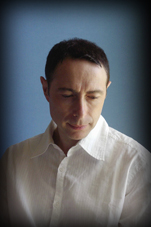 WRITINGS
Since '80s to today Riccardo Piacentini has published several
writings which we can synthetize in four main categories:
• didactic
texts for musical schools (published by Curci
[Milan] and Edipan [Rome]),
• articles
and musicologic essays (since the graduation thesis on Goffredo Petrassi's music to numerous
publications on newspapers, CD-roms and reviews like Nuova Rassegna Musicale
Curci, NC News, Konsequenz, Sud and others),
• specialistic
reports from international meetings (like the
recent ones in Turin and Rome about Music today and spirituality),
• interviews
(on graduation thesis, WEB sites and specialistic reviews),
•
specific writings on “foto-musica con foto-suoni”©
(go to
www.rivegaucheconcerti.org).
You can go through a whole catalogue of PIACENTINI's writings clicking on the following animated gif...
Rive-Gauche Concerti
Phone and fax +39.011.6614170
Strada degli Alberoni 12/22,
10133 Turin (Italy)
rgauche@arpnet.it
Copyright © 1998,
Rive-Gauche Concerti
Creation May 15th 1998
Last update November
10th, 2012